Welcome to the Hillfolk Seed Collective Virtual Seed Catalogue. Here you can find information about our seeds, from stories to planting recommendations, and learn about our growers.
We’re in the early stages of developing our collective. Right now our retail seed can only be sourced at the Greenfield Farmers Cooperative Exchange & The Long River Produce Market.
Learn more about our collective here!
2026 Seed Catalogue
medicinal & culinary herbs
-
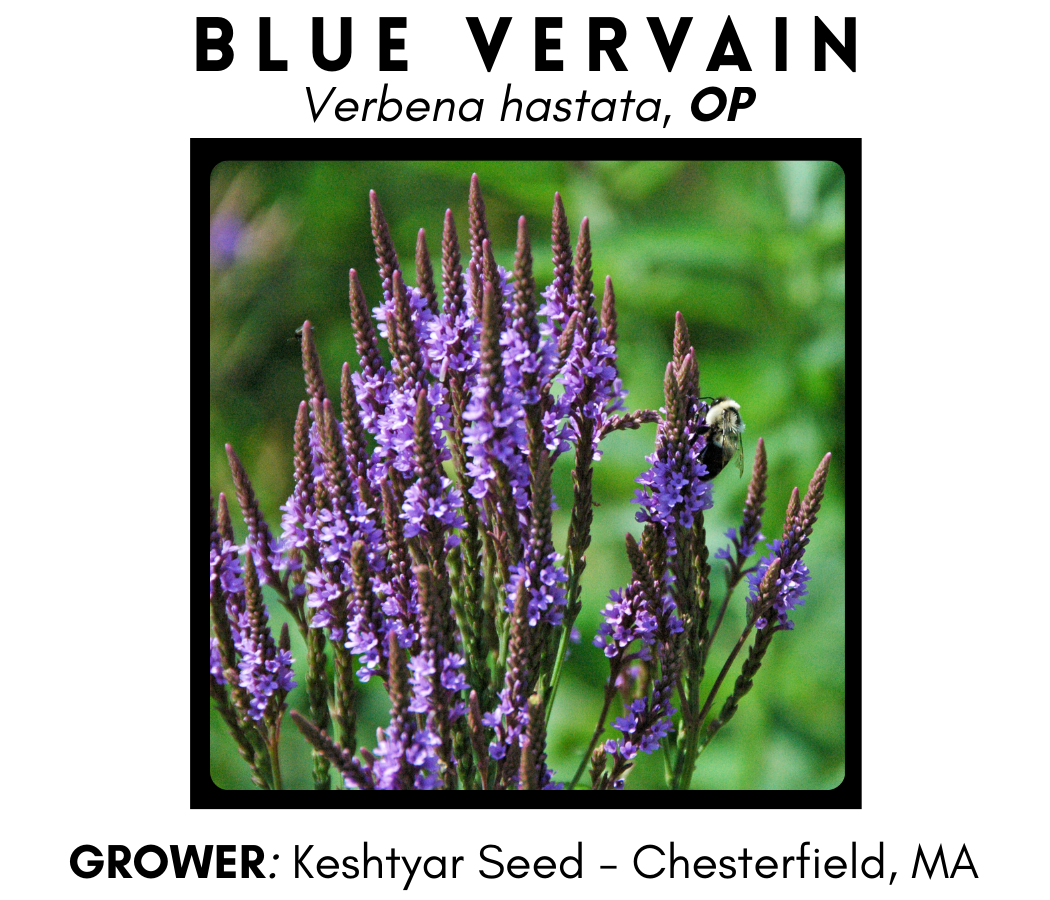
This native perennial is a fast growing wildflower with upright spikes of blue-purple flowers. Plant usually grow to 2-6 ft. The seeds are food source for birds and acts as a host plant for a number of lepidopterans. Flowers are used medicinally in teas & tinctures.
-
DTM: 80–120 days, often flowers in second year
Sow depth: Surface to very light cover (seeds need light to germinate)
Spacing: Thin / space plants 12–36″ apart; roughly 18–24″
Direct sow: outdoors in fall (natural cold stratification) or spring after stratification.
Transplant: start indoors after cold stratification, then transplant when true leaves form.
Cold stratification: recommended (30–60 days): requires a period of cold, moist conditions before germination if not fall-sown
Sun: Full sun to partial shade.
Soil: Prefers moist, well-drained soil but tolerates average conditions; does well in meadows, rain gardens, and wet areas.
Water: Moderate to consistent moisture especially early; tolerates wetter soils better than drought.
-
Flower / Herb Use: Harvest aerial parts as flowers begin opening for teas and herbal use.
Seed Saving: Collect seeds when seed heads dry; store in cool, dry place
-
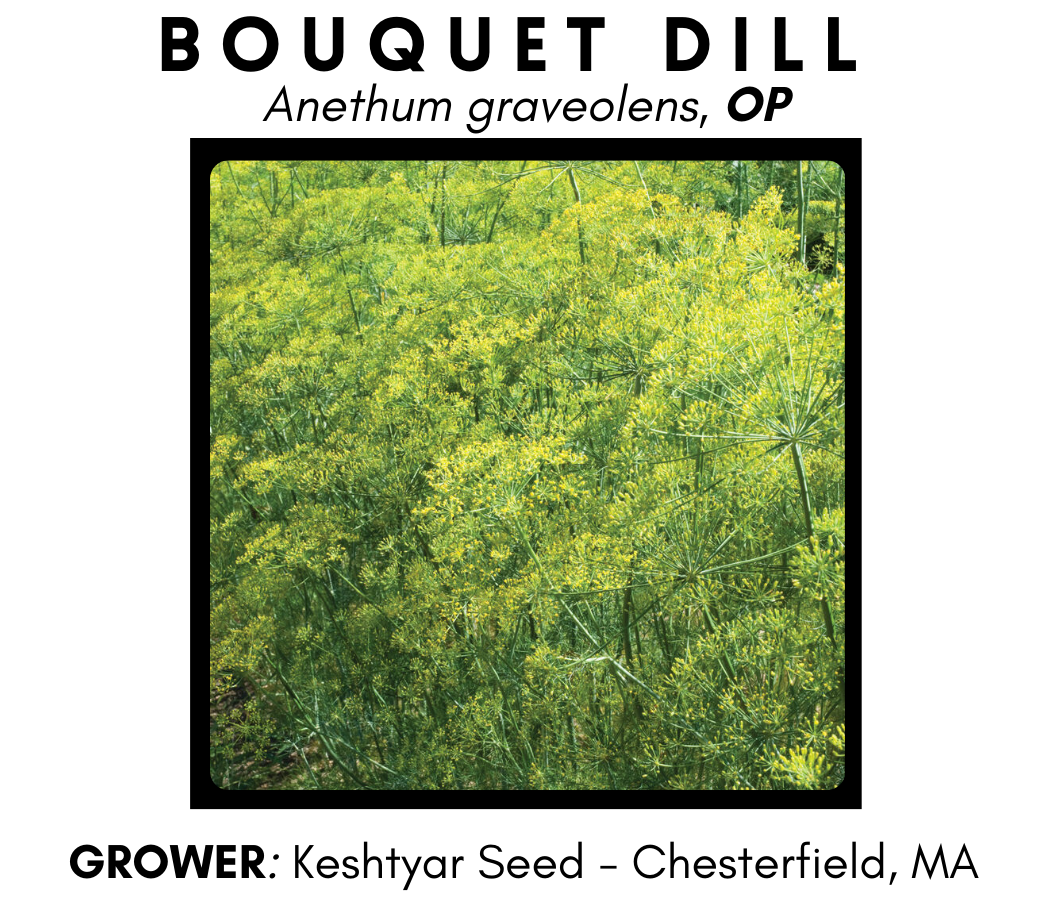
Dill variety grown for its abundant and fragrant foliage. grows 4-5' tall self sows easily. Flowers great for pollinators and seeds, seeds and foliage great for pickling!
-
DTM: 55 from seed (for leaves)
Sow depth: ¼ inch
Spacing: 6-12" in row, 12" between rows
Direct sow: preferred for stronger root development
Sun: Full sun
Soil: Fertile, well-drained soil.
-
Herb Use: Harvest foliage early before stalk matures.
Seed Saving: Harvest seed when heads are dry and brown. Dill seeds can be harvested earlier and dried down inside if birds or seed shattering are a concern.
-
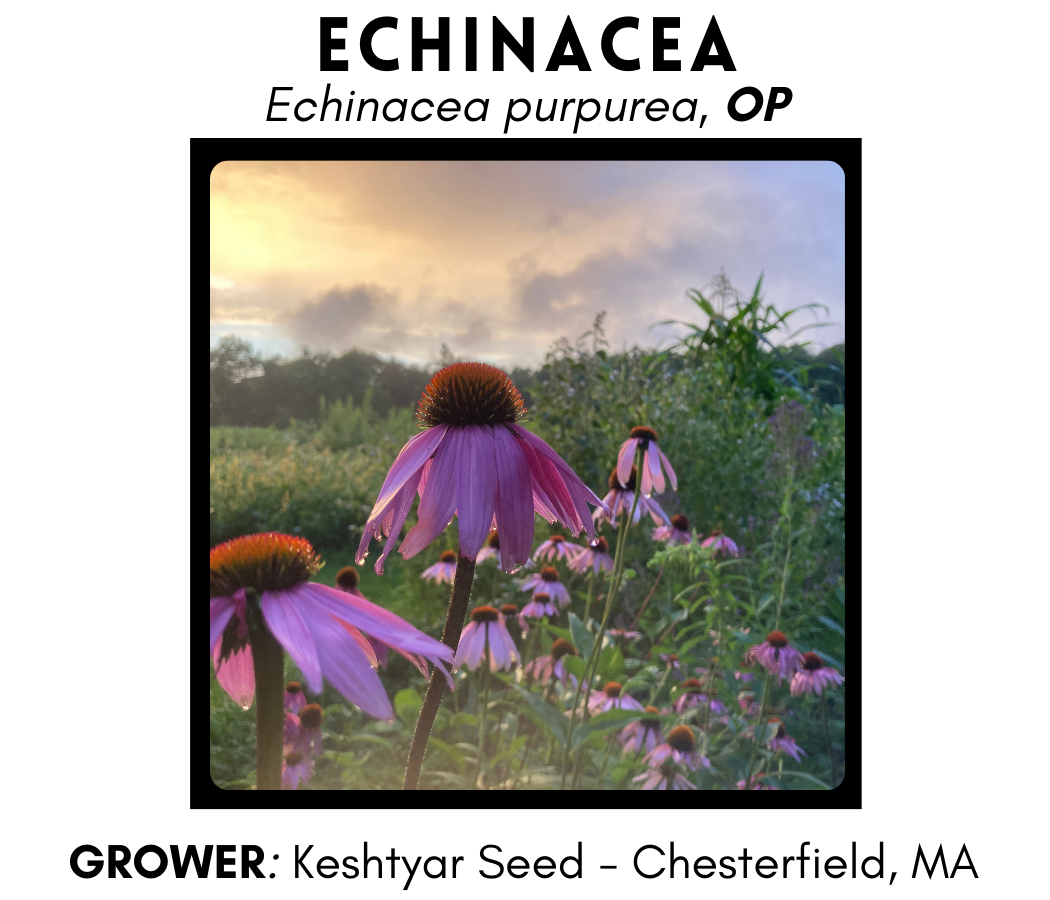
Hardy perennial native and medicinal herb with large purple-pink daisy-like flowers; traditionally used to support immune health and valued by pollinators.
-
DTM: 90–120 days to first bloom (blooms first year if started early; full flowering in year 2)
Sow depth: Surface sow or press lightly into soil; needs light to germinate
Spacing: 12–18 in. between plants; 18–24 in. between rows
Direct sow: Sow in early spring after frost or in fall for natural stratification
Transplant: Start indoors 8–10 weeks before last frost; transplant after hardening off
Cold stratification: Cold stratification recommended—30–60 days moist cold improves germination; fall sowing naturally satisfies this
Sun: Full sun to partial shade.
Soil: Well-drained loam or sandy soil; tolerant of poor soils once established
-
Flower / Herb Use: Harvest flowers at full bloom for fresh or dried use. Leaves may be harvested lightly during flowering. Roots traditionally harvested in fall of year 2–3 for medicinal preparations
Seed Saving: Allow flower heads to fully dry and turn brown on the plant. Harvest seed heads in late summer to fall. Rub or crush heads to release seeds; remove chaff
-
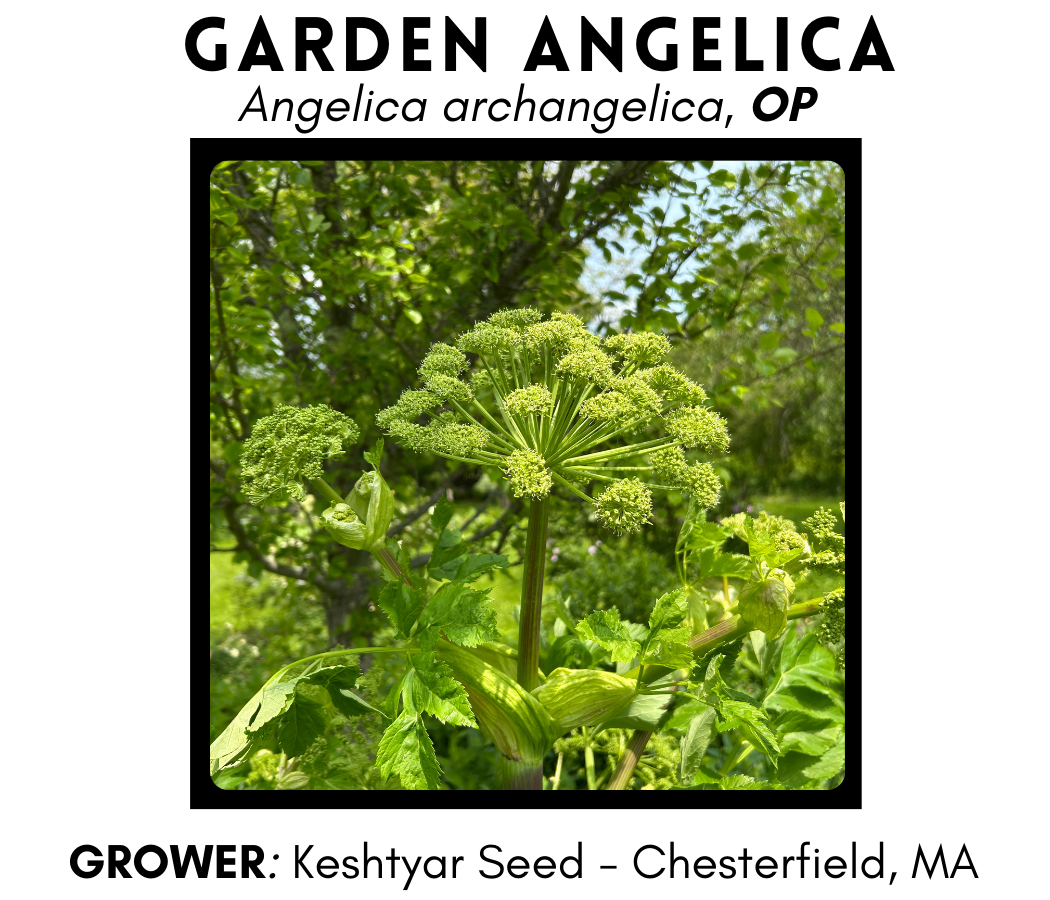
Tall, aromatic biennial herb with hollow stems and large green umbels. Traditionally used for medicinal, culinary, and ornamental purposes. Grows 4–6 ft tall.
-
DTM: 120–180 days for usable stems/leaves (first year); flowers and seed in second year
Sow depth: Surface sow to 1/8 inch deep (light aids germination)
Spacing: 18–24 inches apart
Direct sow: Preferred. Best sown in fall or very early spring.
Transplant: Possible but difficult due to taproot. Transplant only when very young; avoid root disturbance.
Cold stratification: Requires cold, moist stratification for 2–4 weeks. Fresh seed germinates best. Fall sowing naturally satisfies this requirement.
Sun: Full sun to partial shade
Soil: Rich, fertile, consistently moist, well-drained soil; prefers slightly acidic to neutral ph
-
Flower / Herb Use: Harvest root in fall of first year or early spring of second year. Harvest flowers & seeds second year when umbels mature
Seed Saving: Allow flower umbels to fully mature and turn brown. Cut and dry, then gently shake or rub to release seeds. Seeds have a short viability—store briefly and sow fresh for best results.
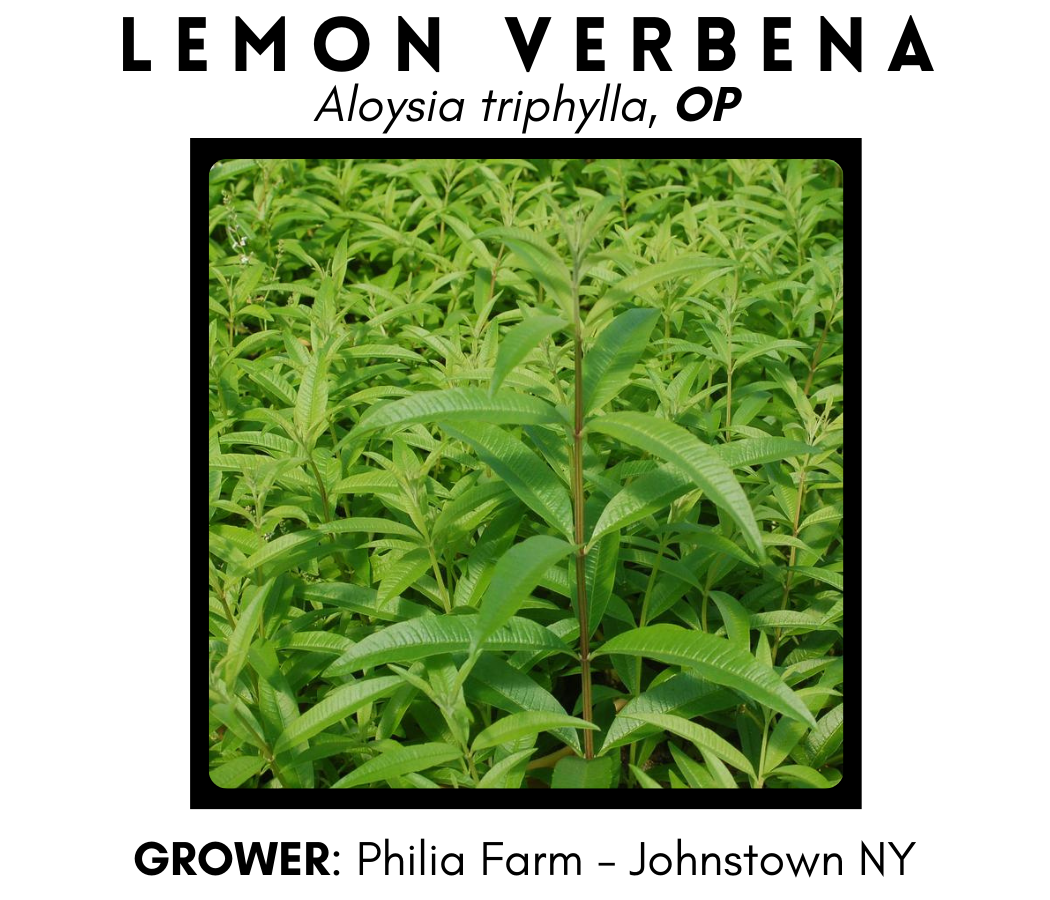
There's been a mix-up! One of our growers accidentally mislabeled lemon balm as lemon verbena. If you purchased lemon verbena seeds, you actually received lemon balm. We apologize for the confusion and appreciate your patience as we work through these early growing pains.
-
Tender perennial shrub grown for its intensely lemon-scented leaves; used fresh or dried for teas, culinary uses, and herbal remedies.
-
DTM: 60–90 days from transplant to first harvest (perennial; harvest ongoing once established)
Sow depth: Surface sow or barely cover; light aids germination
Spacing: 18–24″
Transplant: Start indoors 8–10 weeks before last frost and transplant out after danger of frost
Sun: Full sun
Soil: Well-drained, moderately fertile soil; prefers slightly acidic to neutral pH
-
Flower / Herb Use: Begin harvesting once plants are well established; cut stems as needed, leaving at least 2/3 of the plant intact. Harvest before flowering for best flavor. Can be cut back regularly to encourage bushy growth.
Seed Saving: Difficult. Plants rarely set viable seed in cooler climates. Lemon verbena is best propagated by softwood or semi-hardwood cuttings rather than saved seed.
-
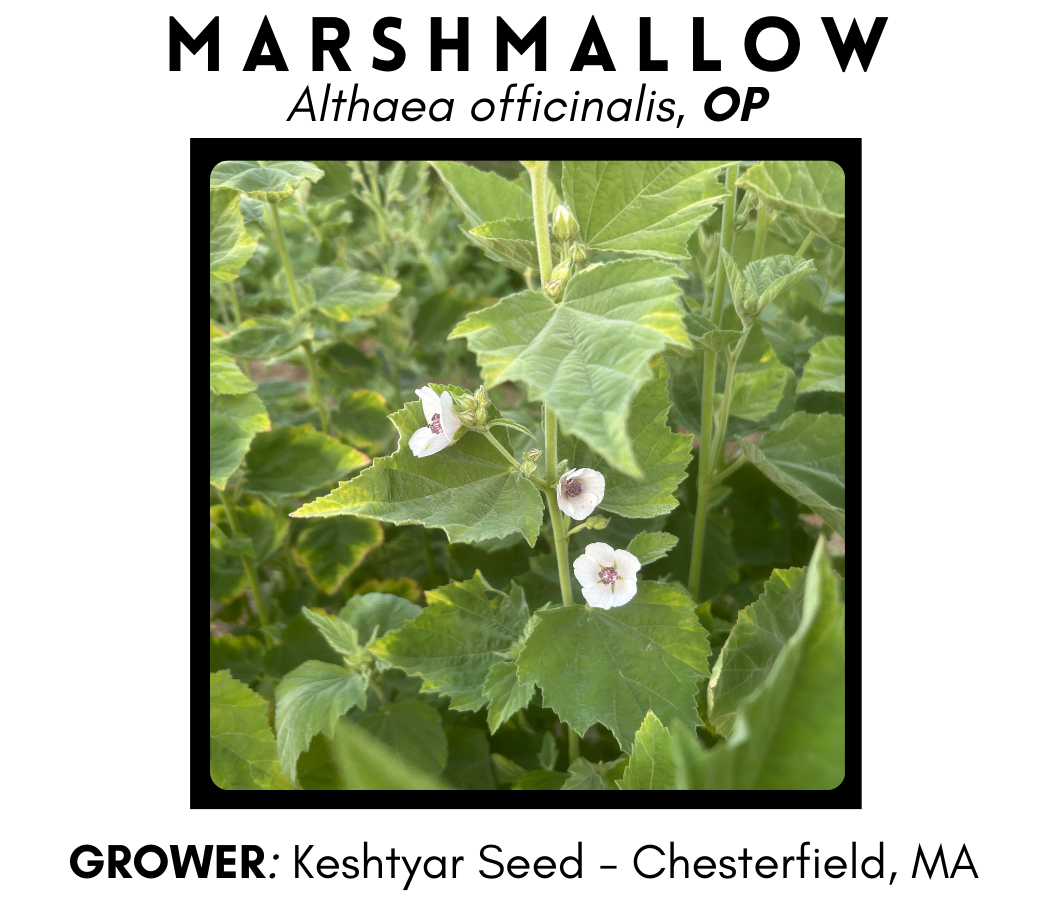
Perennial medicinal herb with soft, velvety leaves and pale white-pink flowers. Traditionally valued for its soothing, mucilaginous roots and leaves. Grows 3–5 ft tall.
-
DTM: 120–150 days for leaf harvest; roots best harvested in fall of second year
Sow depth: Surface sow to 1/8 inch deep
Spacing: 18–24″inches apart
Direct sow: in fall or early spring
Transplant: Transplant when seedlings are small; taproot prefers minimal disturbance.
Cold stratification: improves germination: 2–4 weeks cold, moist stratification recommended. Soaking seed 12–24 hours before sowing can also help.
Sun: Full sun to partial shade.
Soil: Moist, rich, loamy or clay-loam soil; tolerates heavier soils and occasional wetness
-
Flower / Herb Use: Leaves: Harvest as needed during first year. Harvest flowers when fully open. Dig roots in fall of second year for highest mucilage content
Seed Saving: Allow seed pods to fully dry on the plant. Collect and dry thoroughly, then separate seeds from husks.
-
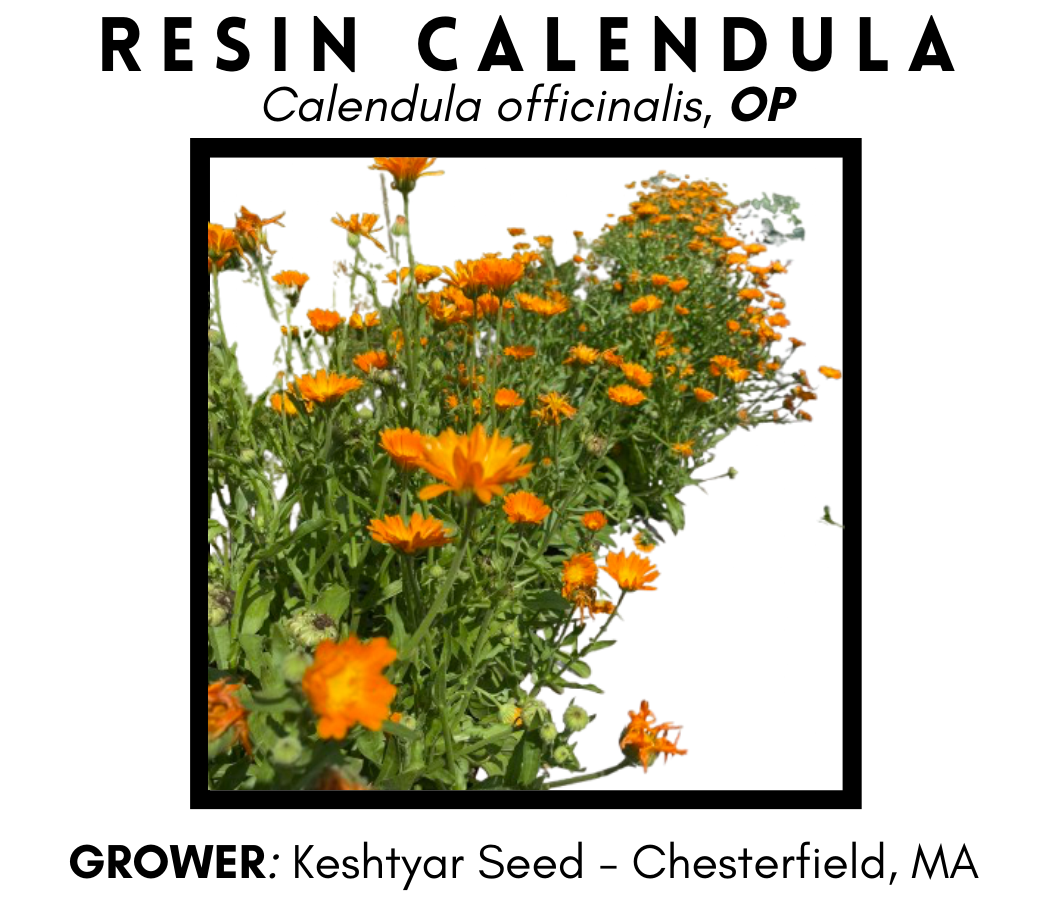
Bright, beautiful calendula variety stewarded at Keshtyar Seed in Chesterfield for the past 3 years. High in medicinal resin, excellent for making salves and tinctures. Beloved by pollinators, self sows readily, easy to harvest and save your own seed!
-
DTM: 60
Sow depth: ½ inch
Spacing: 8-12" in row, 12" between rows
Direct sow: Direct sow or transplant. Calendula is a great self-seeder.
Sun: Full sun
-
Flower / Herb Use: Pluck blooms for continuous production over the whole season.
Seed Saving: Leave some flower heads to close and dry down. seed ready for harvest once they are dry, brown and come off the flower stalk easily.
-
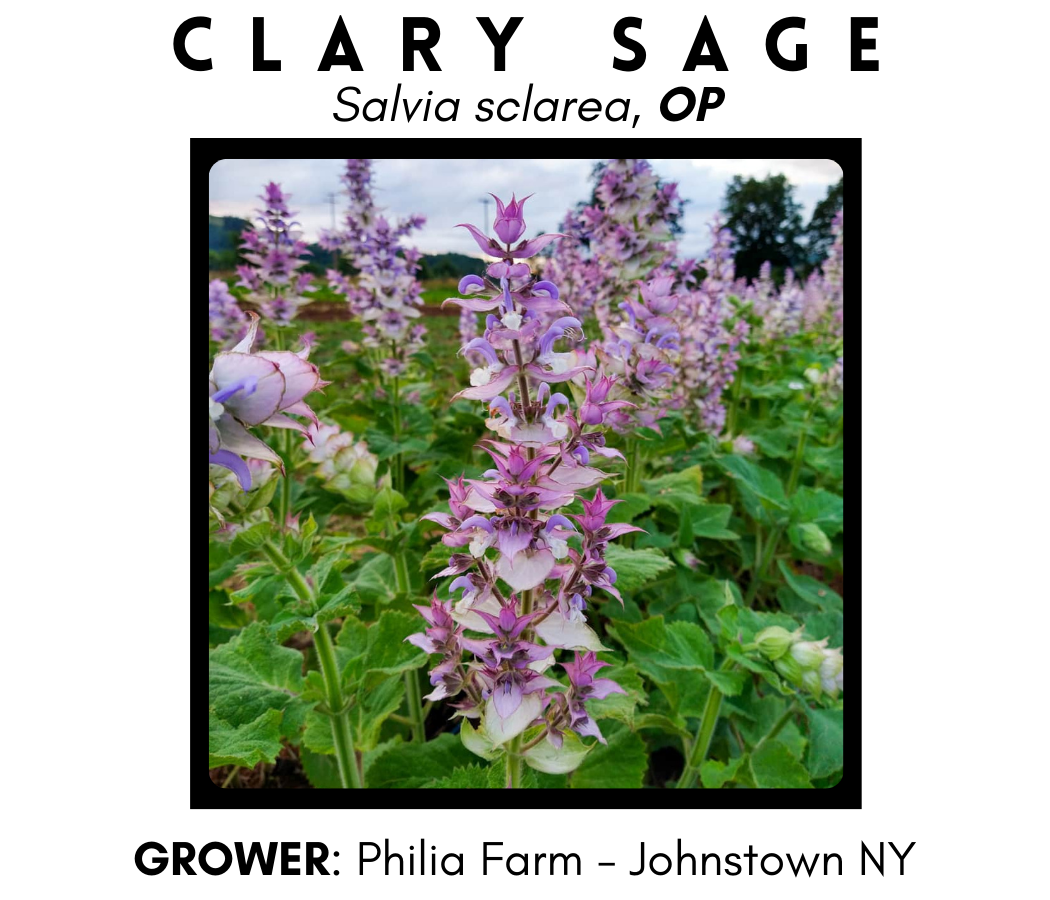
Aromatic biennial to short-lived perennial with large, fuzzy leaves and showy purple-pink bracts; traditionally used for herbal preparations, essential oil, and as an ornamental pollinator plant.
-
DTM: 90–120 days to flowering in the second year (may flower first year if started early)
Sow depth: Surface sow or cover lightly (⅛ inch)
Spacing: 18-24”
Direct sow: Sow outdoors in early spring or fall
Transplant: Start indoors 6–8 weeks before last frost for earlier establishment
Sun: Full sun to partial shade
Soil: Well-drained, moderately fertile soil; prefers neutral to slightly alkaline pH and does not tolerate wet soils
-
Flower / Herb Use: Harvest leaves lightly in the first year. In the flowering year, cut flower stalks when bracts are fully colored for herbal use or drying.
Seed Saving: Allow flower spikes to fully mature and dry on the plant. Collect seeds when heads turn brown and dry.
-
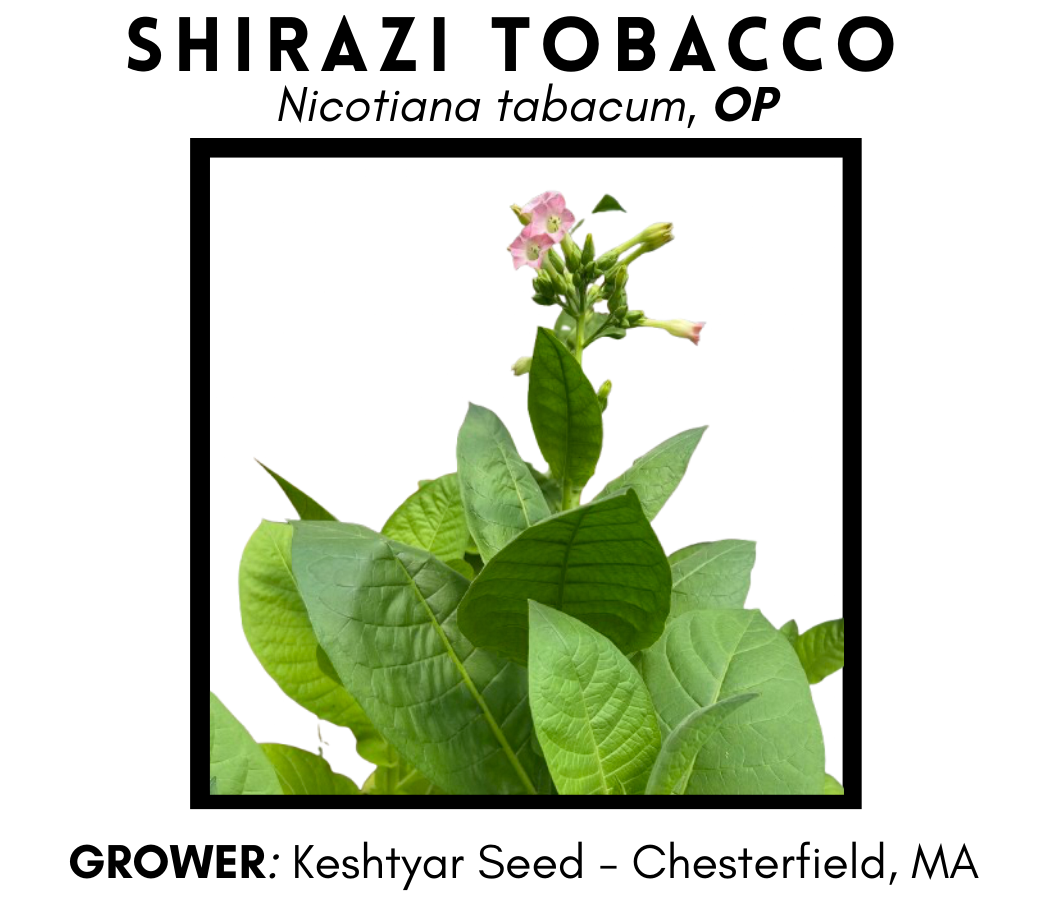
Annual Turkish-type tobacco with light pink flowers and thick, wide leaves. Heirloom from Shiraz, Iran. A lovely ornamental, grows to be 4-5ft tall, said to be high in nicotine and easy to sun-cure.
-
DTM: 80-95
Sow depth: Sprinkle & press into surface of soil
Spacing: 18–24 in. between plants; 30–36 in. between rows
Direct sow: Not recommended; seeds are very small and benefit from controlled starts
Transplant: Start indoors 6–8 weeks before last frost; transplant after danger of frost when plants are 6–8 in. tall
Sun: Full sun (6–8+ hrs daily)
Soil: Well-drained, fertile loam; slightly acidic to neutral
Water: Moderate and consistent; keep evenly moist but not waterlogged, reduce slightly as plants mature
-
Tobacco Use: Harvest leaves when plants begin flowering or just before full bloom, when alkaloid content is highest. Select healthy, fully expanded lower and mid-level leaves; avoid yellowing or damaged foliage. Cut leaves cleanly with scissors or a knife; harvest gradually rather than stripping the whole plant at once. Leaves are traditionally air-cured in a shaded, well-ventilated area until fully dry and pliable
** NOTE: Nicotine is readily absorbed through skin—wear gloves and wash hands after handling
Seed Saving: Seed pods are ready when they turn brown and dry on the plant. Gently crush pods to release seeds; winnow to remove chaff.
beans
-
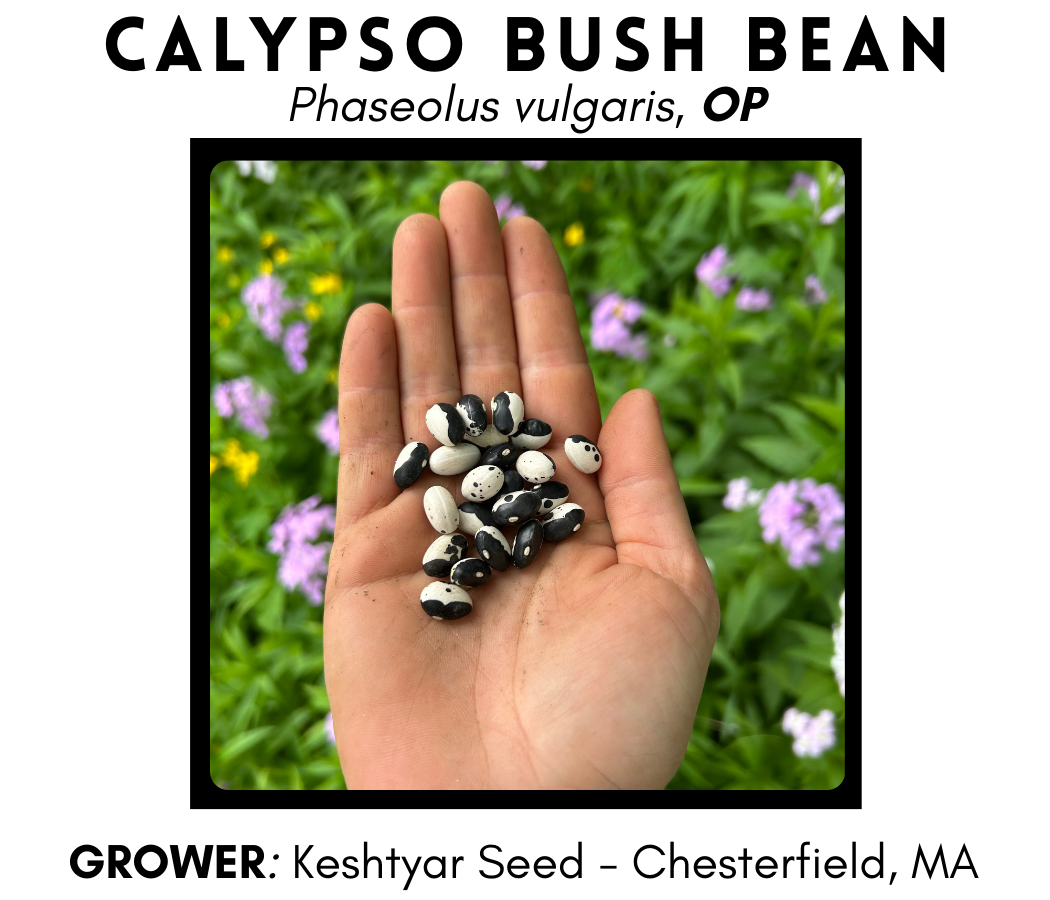
Productive bush dry bean with striking black-and-white “orca” patterned seeds. Compact plants produce heavy yields; beans are creamy with a rich, earthy flavor. Grows 18–24 inches tall.
-
DTM: 90–100 days (dry beans)
Sow depth: 1-1 ½”
Spacing: 3–4 inches apart in rows 18–24 inches apart
Direct Sow: Sow after danger of frost when soil is warm ≥60°F
Transplant: not recommended
Sun: Full sun
Soil: Well-drained, moderately fertile soil; avoid excess nitrogen
-
Dry bean: Allow pods to mature and dry fully on the plant, Shell bean (optional): Harvest pods when plump but still green
Seed Saving: Allow pods to dry completely on the plant until brittle. Harvest before heavy rain, shell beans, and dry thoroughly.

-
Productive bush-type dry bean with glossy jet-black seeds; valued for its rich flavor, good storage qualities, and suitability for soups, stews, and everyday cooking.
-
DTM: 85–100 days to dry bean stage
Sow depth: 1- 1 1/2”
Spacing: 4-6”
Direct sow: Sow outdoors after danger of frost when soil has warmed
Transplant: Not recommended.
Sun: Full sun
Soil: Well-drained, moderately fertile soil; avoid excess nitrogen which encourages leaf growth over pods
-
Harvest for dry beans when pods are fully mature, dry, and rattling, and plants have mostly died back. Pull entire plants or pick pods individually and allow to dry completely before shelling.
Seed Saving: Allow pods to dry fully on the plant. Shell beans and dry seeds thoroughly before storage. Store in a cool, dry place.
-
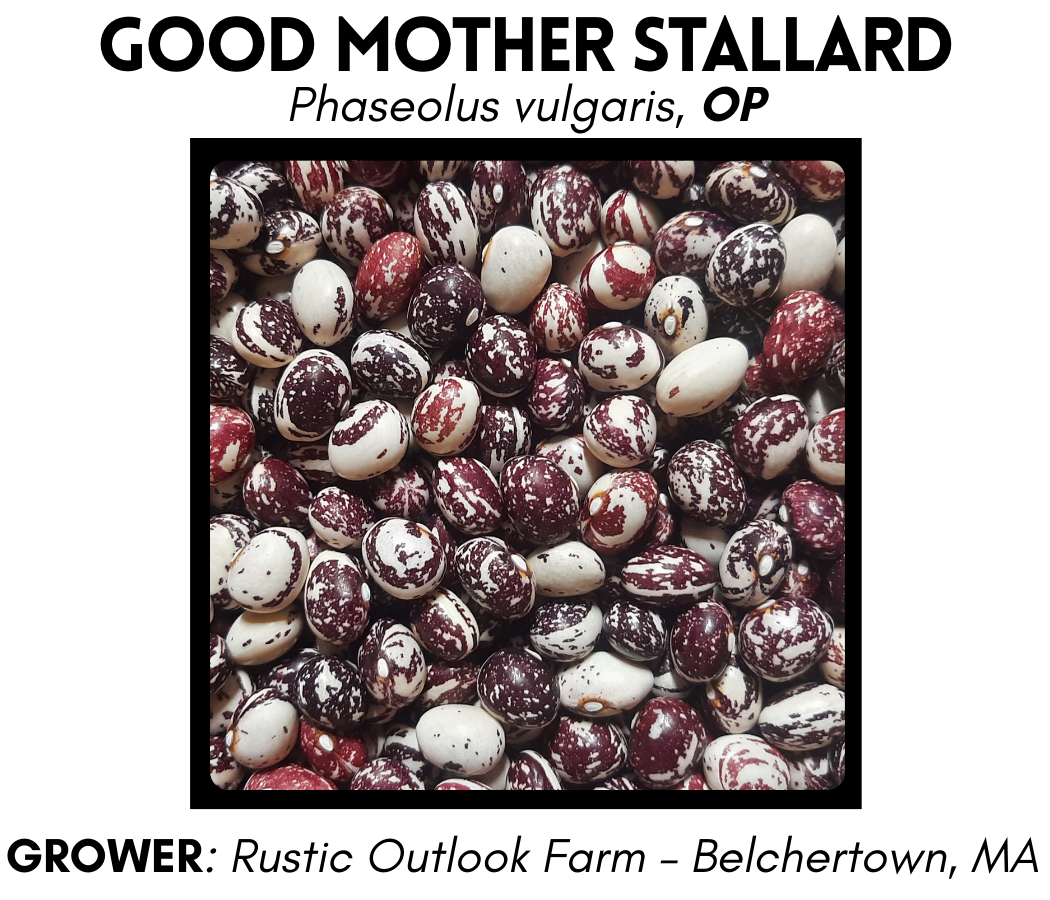
Heirloom bush dry bean producing beautiful maroon-and-white seeds with rich, full flavor; prized for soups, baking, and long storage.
-
DTM: 90-100
Sow depth: 1–1½ inches
Spacing: 4-6 inches
Direct sow: Sow outdoors after danger of frost when soil has warmed
Transplant: Not recommended.
Sun: Full sun
Soil: Well-drained, moderately fertile soil; avoid excess nitrogen, which encourages leafy growth at the expense of bean production
-
Harvest when pods are fully dry, brittle, and plants have mostly died back. Pull whole plants or pick pods and finish drying under cover before shelling.
Seed Saving: Allow pods to dry completely on the plant. Shell beans and dry seeds thoroughly before storage.
-
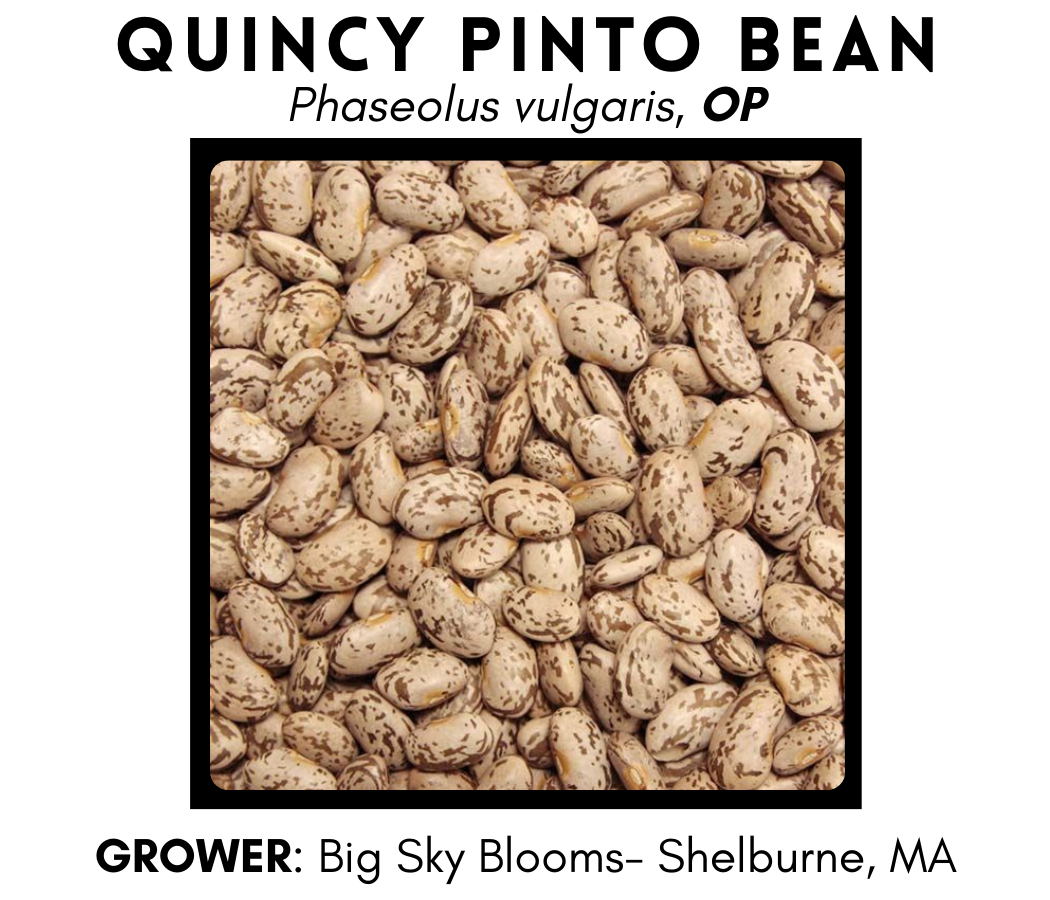
Reliable bush-type pinto bean producing tan seeds mottled with brown; well suited for dry bean production, home gardens, and storage.
-
DTM: 90–100 days to dry bean stage
Sow depth: 1–1½ inches
Spacing: 4-6”
Direct sow: Sow outdoors after danger of frost when soil has warmed
Transplant: Not recommended.
Sun: Full sun
Soil: Well-drained, moderately fertile soil; avoid high nitrogen which promotes foliage at the expense of pods
-
Harvest when pods are dry, brittle, and plants have largely died back. Pull whole plants or pick pods and finish drying under cover before shelling.
Seed Saving: Allow pods to fully dry on the plant. Shell and dry seeds thoroughly before storage.
-
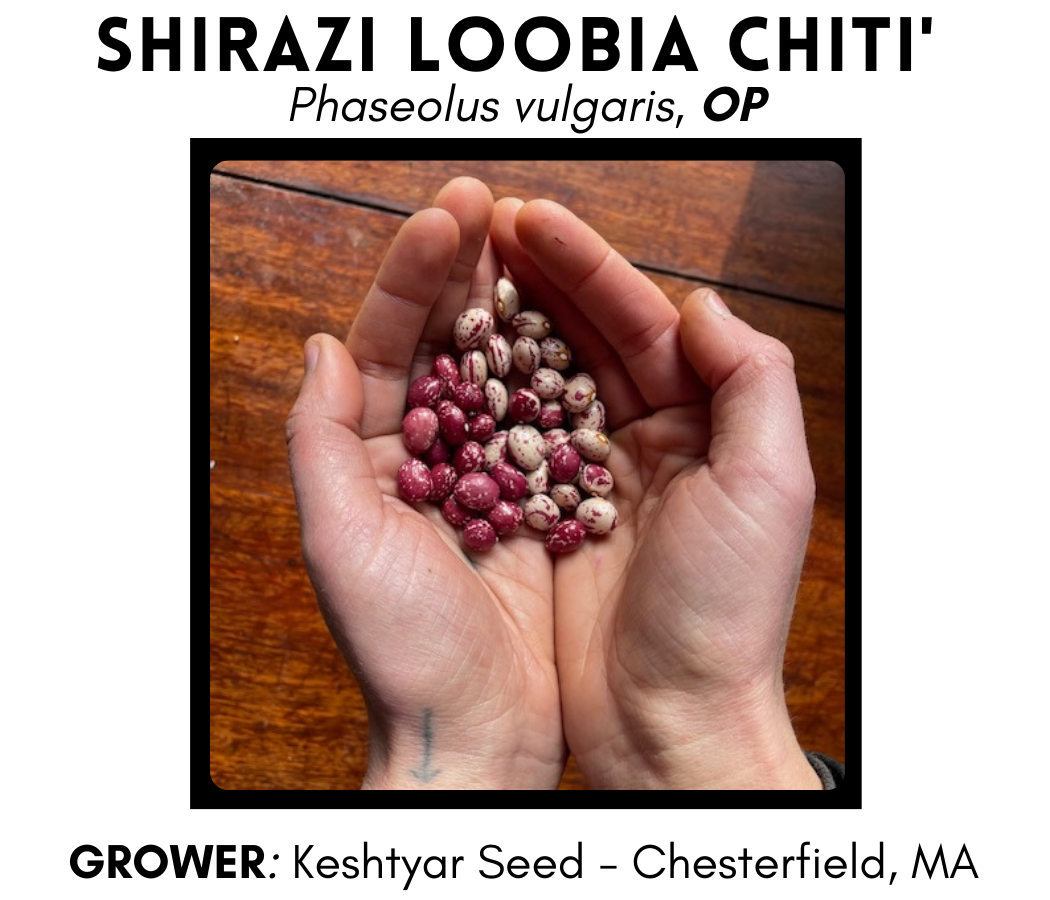
Prolific pole bean, can be eaten dry or as shell bean. Heirloom from Shiraz in southern Iran, traditionally used in hearty stews. Gorgeous cream and magenta striped pods, vines can get up to 8ft!
-
DTM: 120 to dry seed, a bit earlier for shell bean
Sow depth: 1”
Spacing: 6" in row, 2-3' between rows
Direct sow: direct sow once soil warms in late spring/early summer.
Transplant: not reccomended
Sun:full sun
Soil: does well in drier conditions
Special Considerations: strong climber, needs a strong and tall trellis.
-
Beans can be harvested and eaten as shell (fresh) bean or dry bean.
-
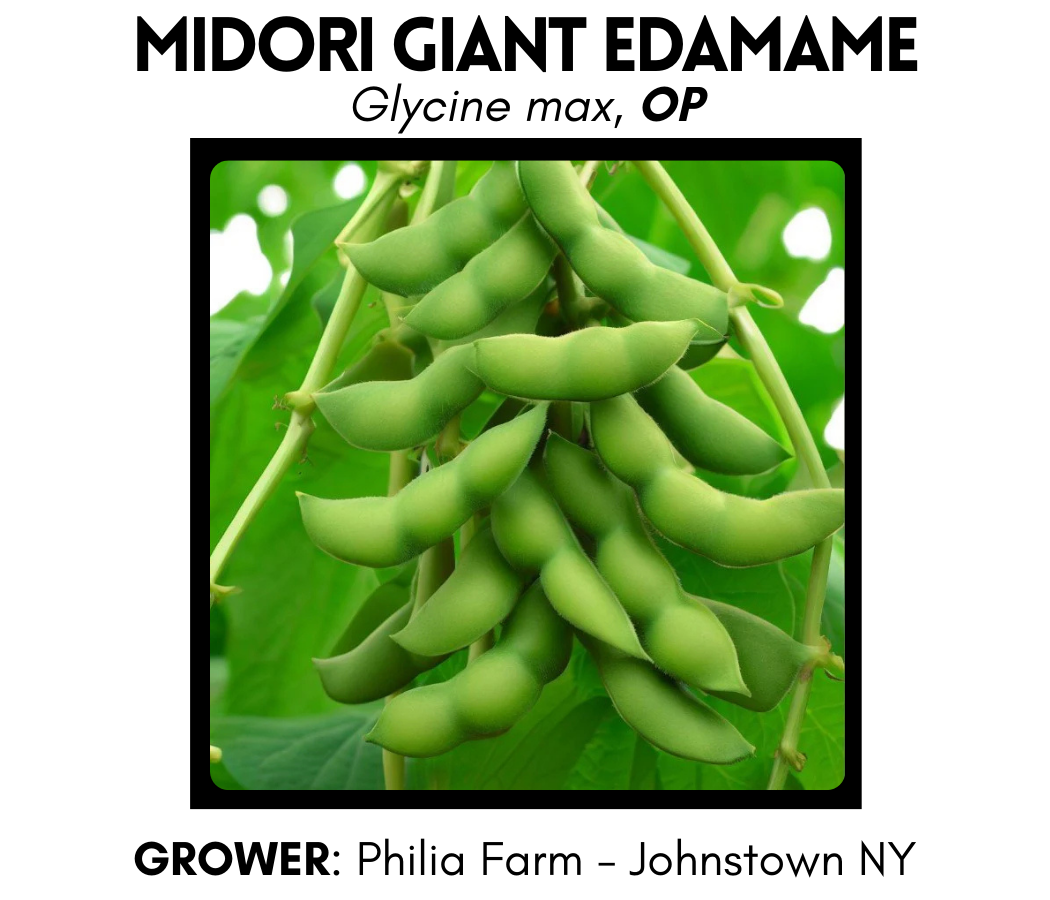
Vigorous, bush-type soybean producing large, bright green pods filled with tender, sweet edamame beans; excellent for fresh harvest, freezing, or cooking.
-
DTM: 70–90 days from sowing to harvest
Sow depth: 1- 1 ½ “
Spacing: 4-6”
Direct sow: sow outdoors after danger of frost when soil is fully warm
Transplant: not recommended
Sun: Full sun
Soil: Well-drained, fertile soil; prefers slightly acidic to neutral pH; enrich with compost for best yields
-
Harvest when pods are fully filled but still bright green, before hardening. Pick pods regularly to encourage continuous production. Can be boiled, steamed, or frozen.
Seed Saving: allow pods to fully mature and dry on the plant if saving seed. Shell seeds, dry thoroughly, and store in a cool, dry place.
flowers
-
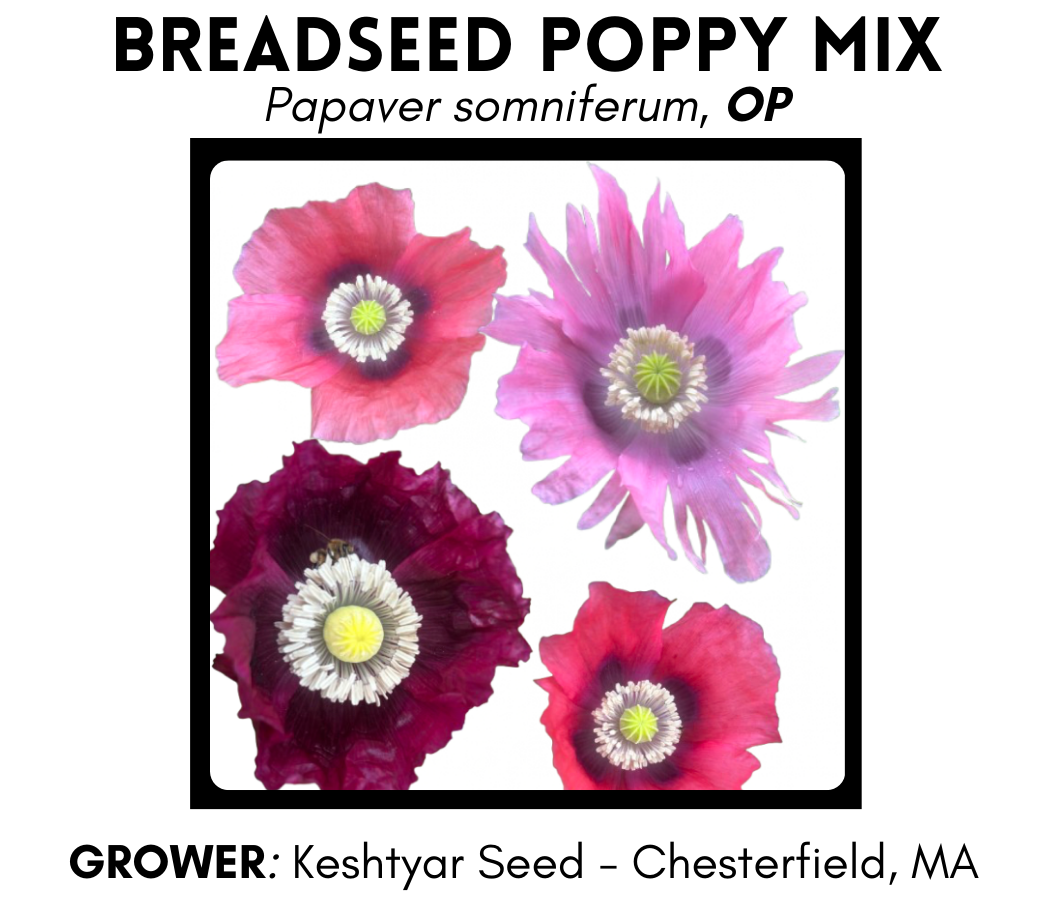
Annual poppy mix producing large, silky blooms in shades of purple, pink, and mauve, with single, semi-double, and double flower forms. Followed by ornamental seed pods valued for culinary seed and dried arrangements. Grows 3–4 ft tall.
-
DTM: 80–100 days to flower; seed pods mature shortly after bloom
Sow depth: Surface sow — do not cover (needs light to germinate)
Spacing: 8–12 inches apart (thin seedlings early)
Direct sow: Required. Fall sowing or very early spring sowing improves germination and vigor. Prefers cool soil for germination.
Transplant: poppies do not transplant well
Sun: Full sun
Soil: Well-drained, average to poor soil; avoid rich or heavily fertilized soil
-
Flower / Herb Use: Culinary use once fully dry (seeds)
Seed Saving: Allow pods to dry completely on the plant. Cut pods, finish drying indoors, then shake or break open to release seeds.
-
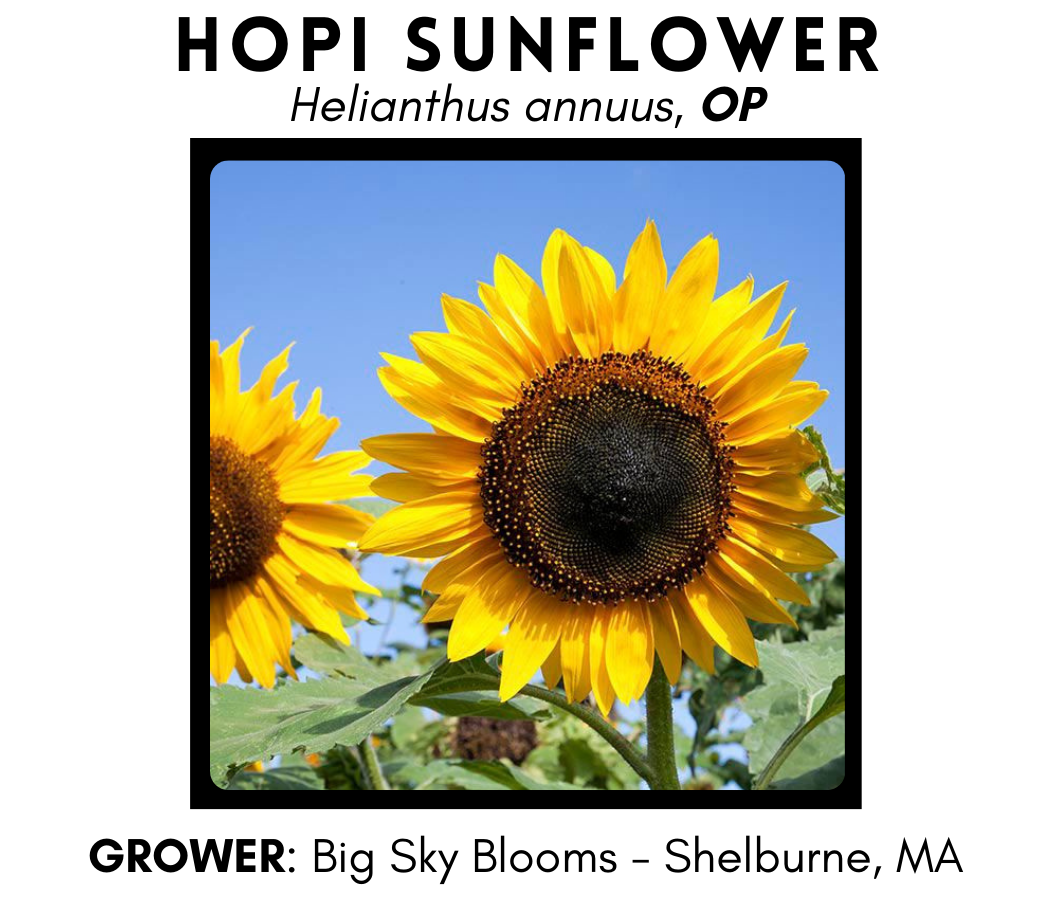
Tall, traditional sunflower grown by the Hopi for its deep black seeds used for food, oil, and natural dye; also valued for its striking single heads and resilience in dry conditions.
-
DTM: 90–110 days
Sow depth: 1-1 ½”
Spacing: 12-24”
Direct sow: Sow outdoors after danger of frost when soil has warmed
Sun: Full sun
Soil: Well-drained soil; adaptable to a range of soil types and tolerant of low fertility once established
-
Harvest when backs of flower heads turn yellow to brown and seeds are fully black and firm. Cut heads and dry further in a well-ventilated, dry location before rubbing seeds free.
Seed Saving: Allow heads to fully mature and dry. Protect from birds if saving seed.
-
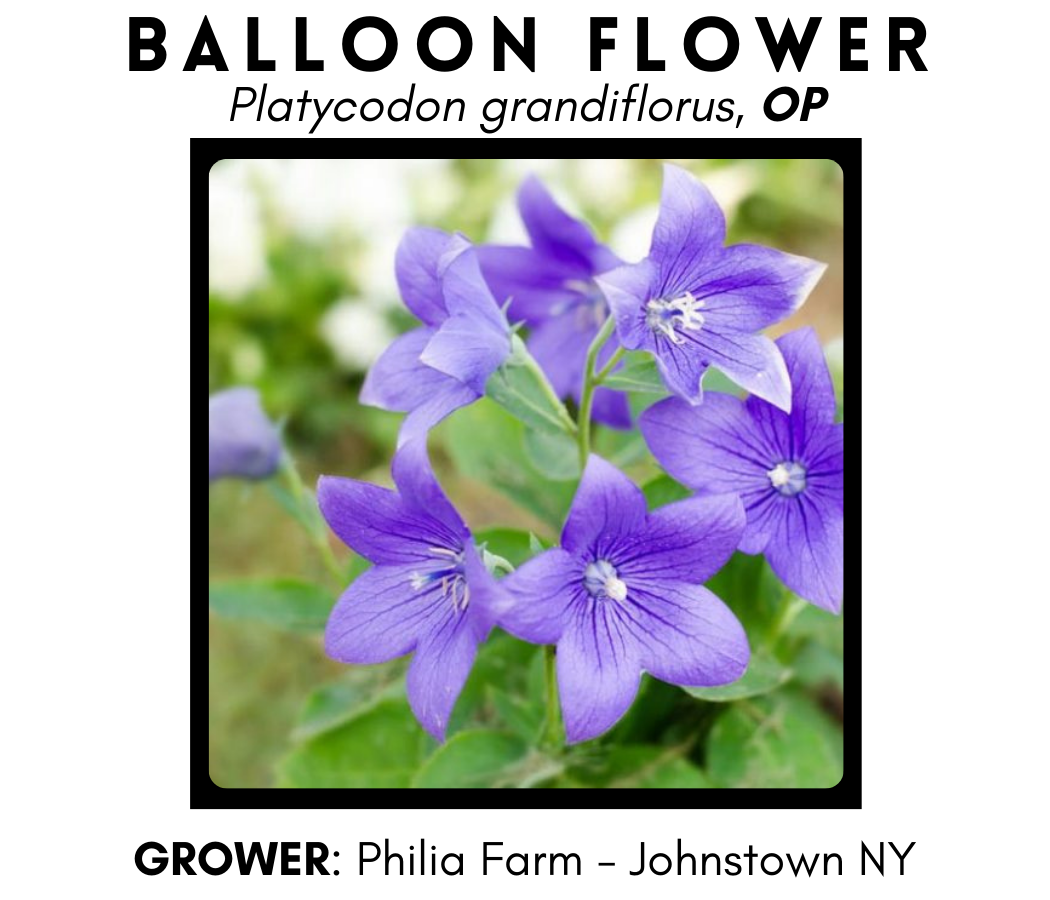
Hardy perennial producing balloon-like buds that open into star-shaped flowers. Long-lived and clump-forming. Grows 18–30 inches tall.
-
DTM: 90–120 days from seed to first bloom; flowers reliably in mid- to late summer in subsequent years
Sow depth: Surface sow or barely cover (requires light to germinate)
Spacing: 12–18 inches apart
Direct sow: Can be direct sown in early spring or fall; cool soil improves germination
Transplant: Transplant young seedlings only — develops a deep taproot and resents disturbance once established
Sun: Full sun to part shade
Soil: Well-drained, moderately fertile soil; tolerates average soils but dislikes waterlogged conditions
-
Cut flower harvest: Harvest when buds are fully inflated and just beginning to show color, or just as flowers begin to open. Cut in the cool of the morning and place immediately in water. Vase life is 7–10 days. Removing spent blooms encourages continued flowering.
Seed saving: Allow pods to mature and dry on the plant until papery brown. Harvest before pods fully split to prevent seed loss. Dry further indoors if needed, then thresh and clean.
-
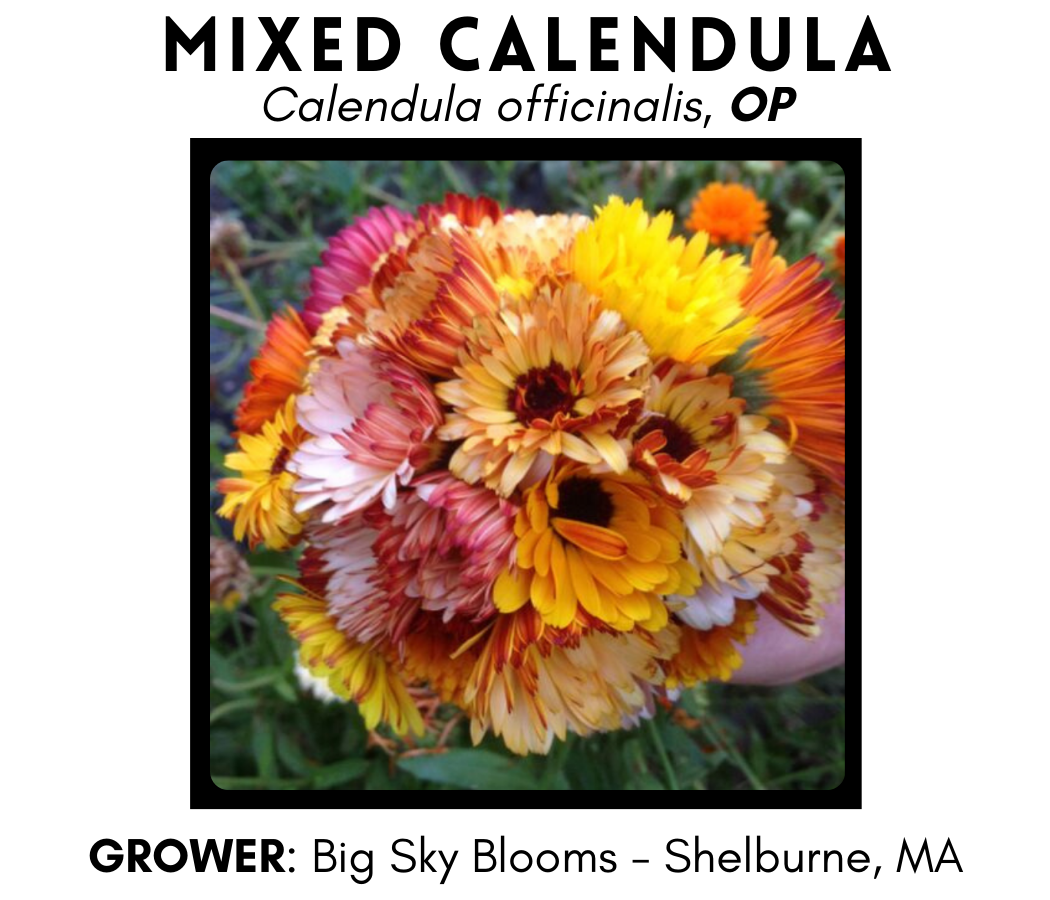
Hardy annual with bright, daisy-like flowers in mixed shades of yellow, orange, and apricot; grown primarily for ornamental display, pollinator support, and cut flowers.
-
DTM: 50–70 days to first bloom
Sow depth: ¼”
Spacing: 8-12”
Direct sow: Sow outdoors in early spring or fall
Transplant: Start indoors 4–6 weeks before last frost for earlier blooms
Sun: Full sun
Soil: Well-drained, average fertility soil; tolerates poorer soils better than rich ones
-
Deadhead regularly to encourage continuous flowering. Flowers may be cut for arrangements or allowed to mature for seed.
Seed Saving: Allow flower heads to dry fully on the plant. Collect the curved, spiky seeds once dry.
-
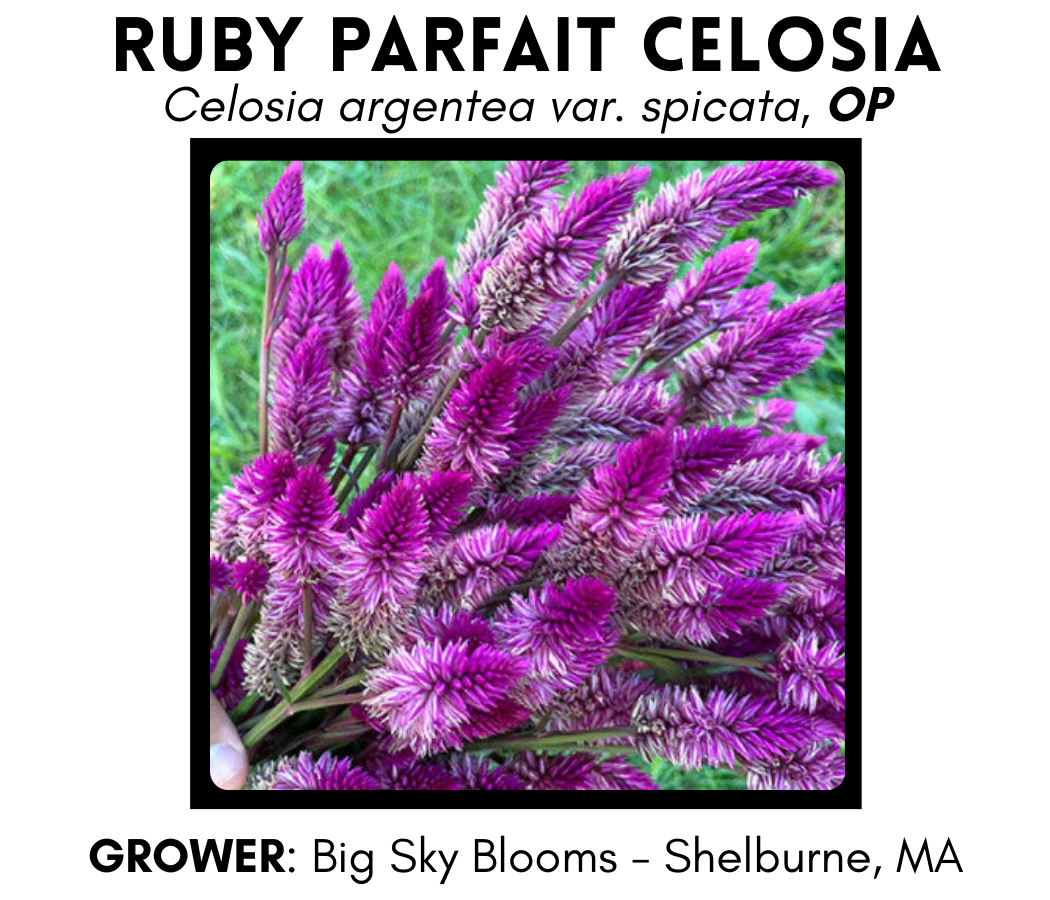
Striking ornamental annual with velvety, deep ruby-red plume flowers; valued for garden color, cut flowers, and long-lasting dried arrangements
-
DTM: 90-100 days to full flower
Sow depth: Surface sow or lightly press into soil; light aids germination
Spacing: 10-12”
Transplant: Start indoors 6–8 weeks before last frost and transplant out after soil has warmed
Sun: Full sun
Soil: Well-drained, moderately fertile soil; avoid heavy, waterlogged soils
-
Harvest flower plumes when fully colored and firm. Cut for fresh arrangements or hang upside down to dry for everlasting use. Regular cutting encourages continued blooming.
Seed Saving: Allow flower heads to fully mature and dry on the plant. Rub or shake heads to release tiny black seeds. Winnow chaff and store seeds
greens
-
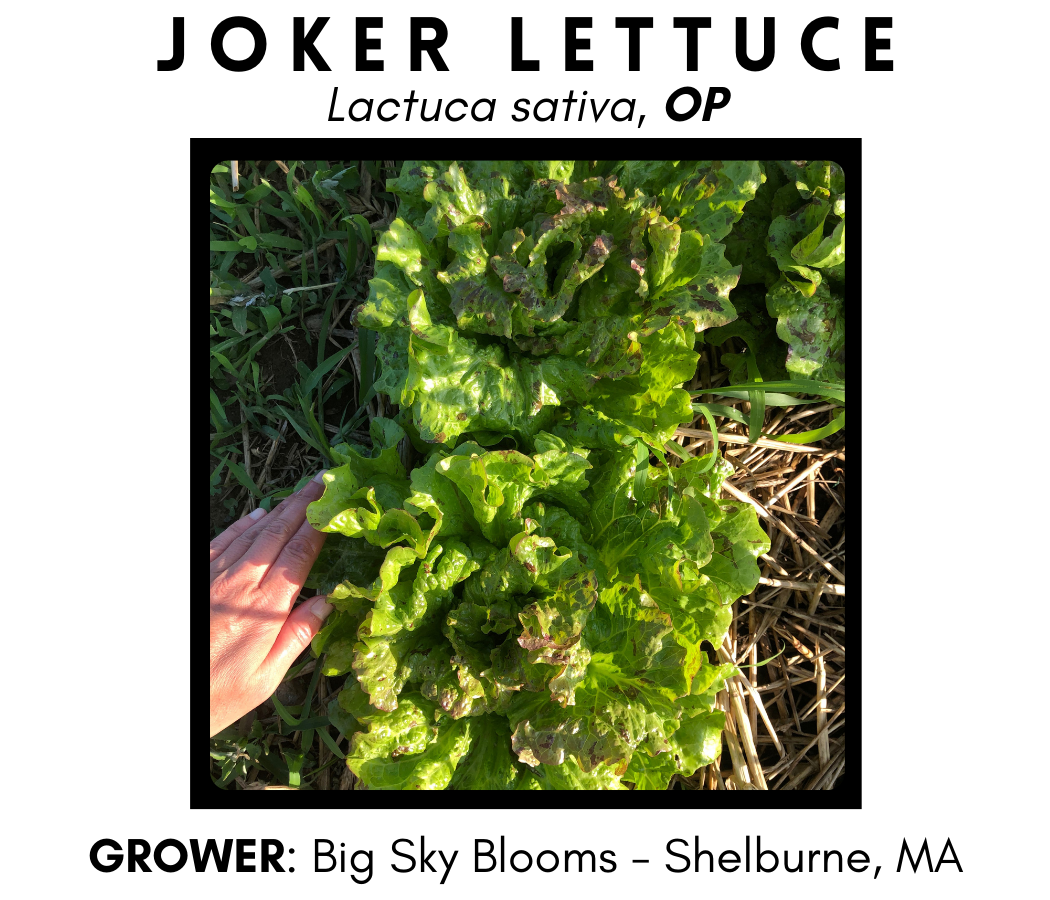
Crisp and tender butterhead-type lettuce with bright green, frilly leaves; flavorful and slow to bolt, ideal for fresh salads and cut-and-come-again harvests.
-
DTM: 50-60
Sow depth: Surface sow or cover lightly (⅛ inch)
Spacing: 8-10”
Direct sow: sow in early spring or late summer for fall harvest
Transplant: start indoors 3–4 weeks before last frost for earlier harvest
Sun: Full sun to partial shade.
Soil: Rich, well-drained soil with consistent moisture; prefers cooler temperatures and high organic matter
-
Harvest whole heads when mature or pick outer leaves regularly for cut-and-come-again use. Best flavor and texture are achieved in cool weather; heat may cause bolting.
Seed Saving: allow selected plants to bolt and flower. Collect seeds once fully dry. Lettuce is largely self-pollinating but isolation ensures variety purity.
-
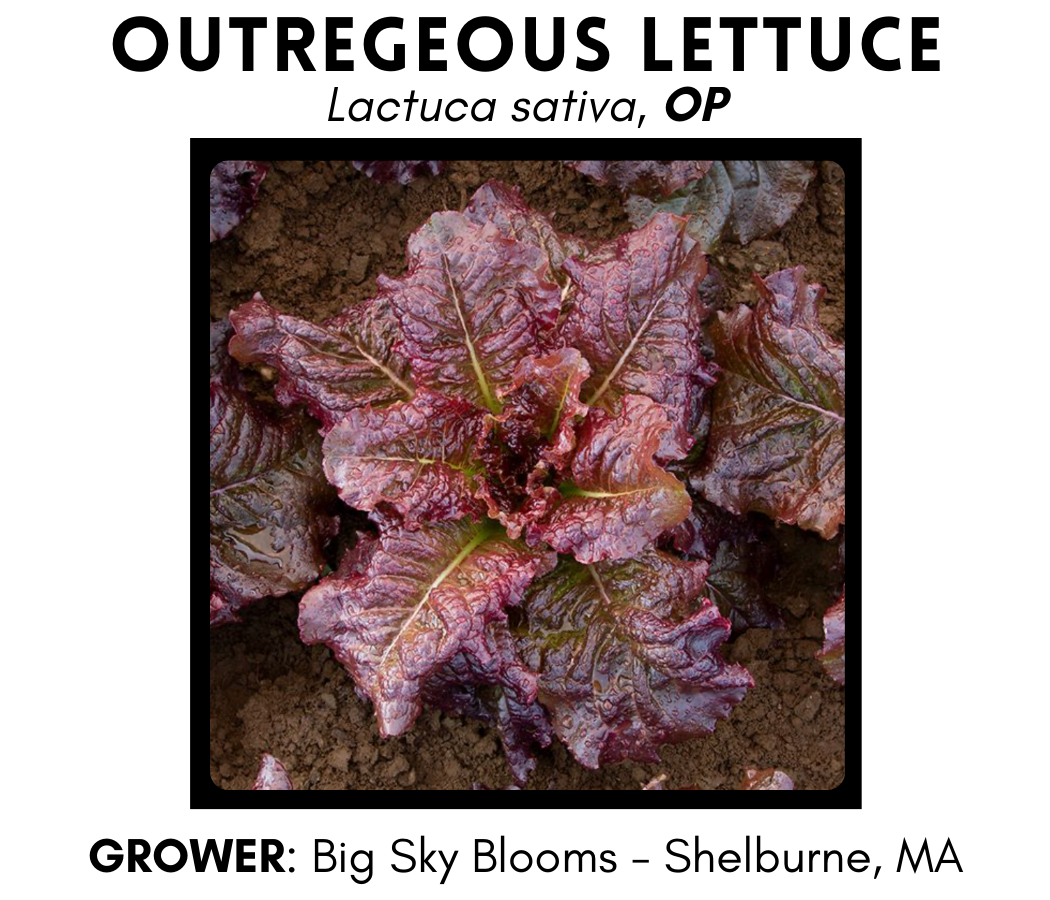
Vibrant red romaine-type lettuce with thick, crunchy leaves and a sweet, mild flavor; prized for color, texture, and slow bolting in cooler conditions.
-
DTM: 60-70
Sow depth: Surface sow or cover lightly (⅛ inch)
Spacing: 8-10”
Direct sow: sow in early spring or late summer for fall harvest
Transplant: start indoors 3–4 weeks before last frost for earlier harvest
Sun: Full sun to partial shade.
Soil: Rich, well-drained soil with consistent moisture; prefers cooler temperatures and high organic matter
-
Harvest whole heads when mature or pick outer leaves for continuous use. Best flavor develops in cool weather; heat may cause bolting.
Seed Saving: allow selected plants to bolt and flower. Collect and dry seeds fully before storage. Lettuce is largely self-pollinating but isolation ensures variety purity.
-
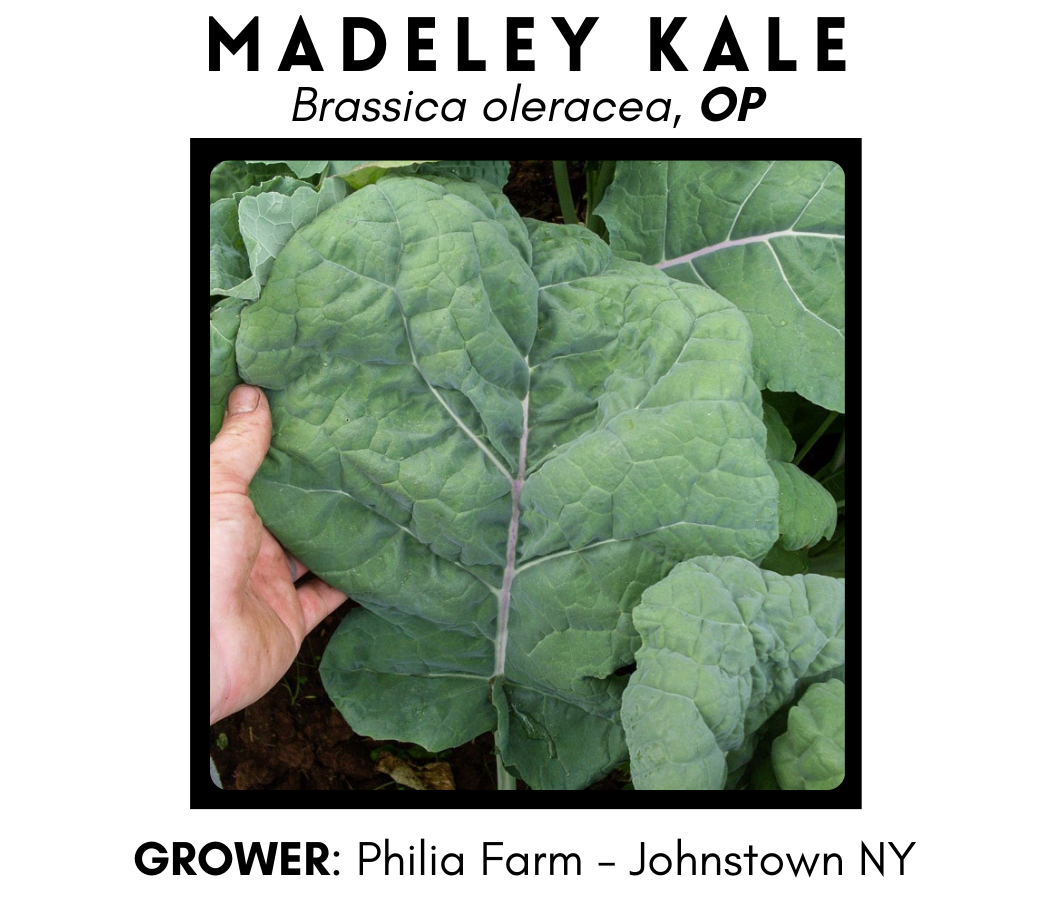
Robust, cold-hardy kale with deeply curled, dark green leaves; mild flavor that improves after frost, excellent for fresh greens, cooking, and winter harvests.
-
DTM: 50–65 days for baby leaves, 70–90 days for mature leaves
Sow depth: ¼ to ½”
Spacing: 12-18”
Direct sow: Sow outdoors in early spring or late summer for fall/winter harvest
Transplant: start indoors 4–6 weeks before last frost for earlier harvest
Sun: Full sun to partial shade.
Soil: Rich, well-drained soil with consistent moisture; benefits from organic matter and tolerates a wide pH range
-
Harvest outer leaves continuously for cut-and-come-again use, or wait for full maturity. Flavor and tenderness improve after light frost.
-
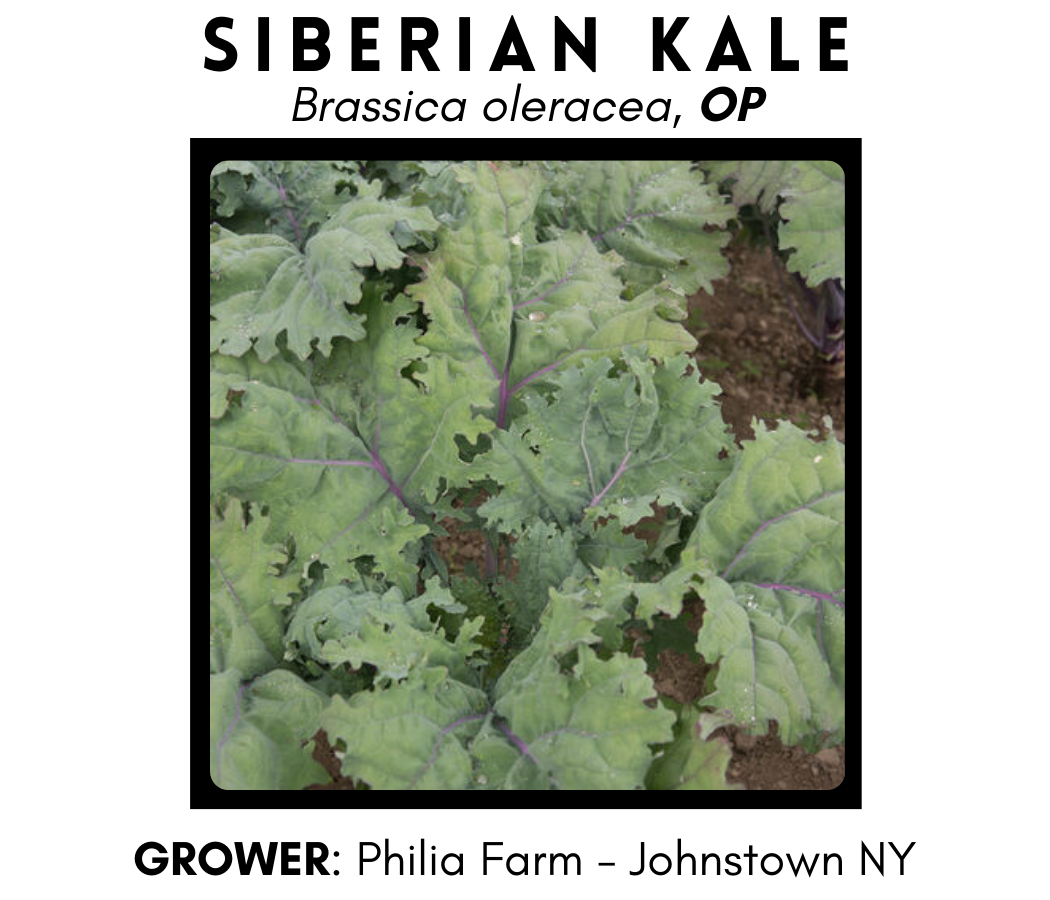
Hardy, cold-tolerant kale with tender, curly leaves; mild flavor that improves after light frost, ideal for winter harvests and year-round greens in milder climates.
-
DTM: 50–65 days for baby leaves, 70–90 days for mature leaves
Sow depth: ¼ - ½”
Spacing: 12-18”
Direct sow: sow outdoors in early spring or late summer for fall/winter harvest
Transplant: start indoors 4–6 weeks before last frost for earlier harvest
Sun: Full sun to partial shade.
Soil: Rich, well-drained soil with consistent moisture; tolerates a wide pH range and benefits from organic matter
-
Harvest outer leaves continuously for cut-and-come-again use, or wait for full maturity. Frost enhances flavor and tenderness.
Seed Saving: allow plants to bolt and flower. Collect seeds when pods turn brown and dry
more vegetables
-
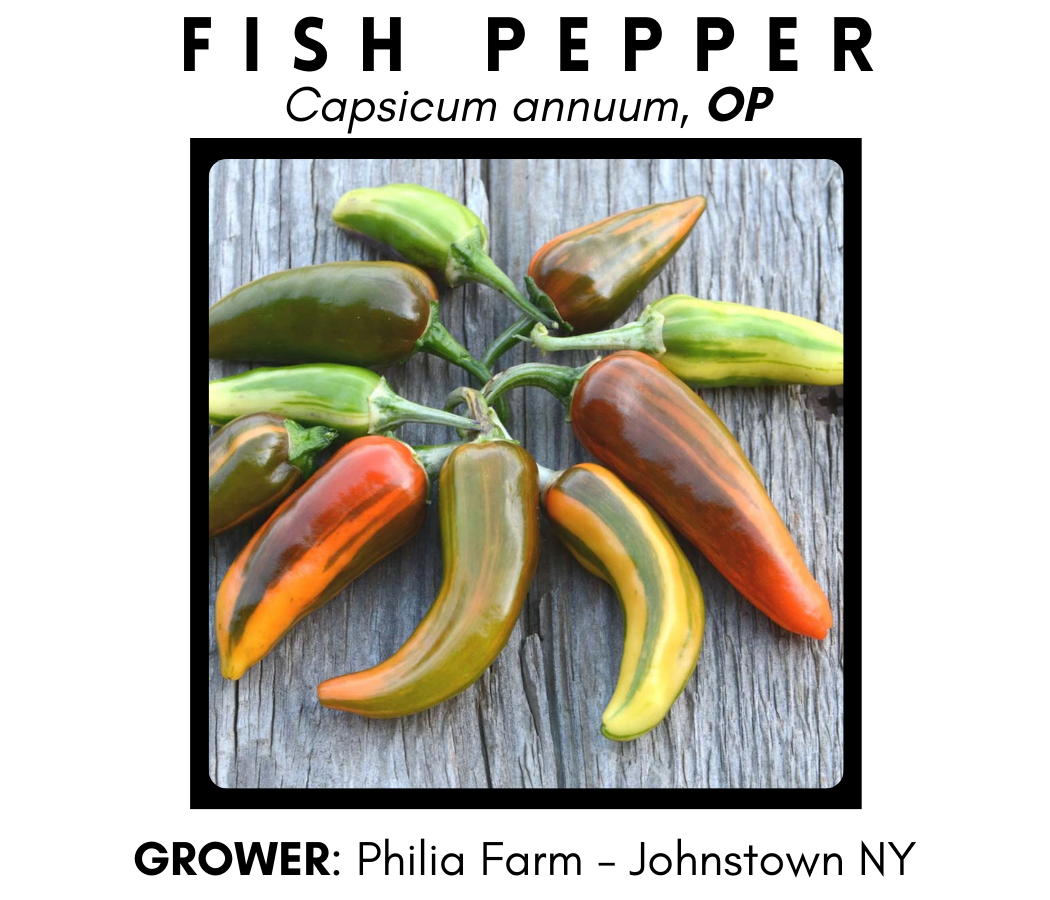
Heirloom hot pepper with variegated green-and-white foliage and small, tapering peppers that ripen from green to vibrant red; historically used in seafood dishes for its medium heat and flavor.
-
DTM: 75–90 days from transplant to first harvest
Sow depth: ¼ “
Spacing: 18-24”
Direct sow: Not recommended; peppers need warm soil for germination
Transplant: start indoors 8–10 weeks before last frost and transplant out after soil has warmed
Sun: Full sun
Soil: Well-drained, fertile soil with consistent moisture; prefers slightly acidic to neutral pH
-
Harvest peppers when fully colored for best flavor. Pick regularly to encourage continuous fruiting. Can be used fresh, cooked, or dried
Seed Saving: allow fully ripe red fruits to mature on the plant. Extract seeds, rinse, and dry thoroughly

-
Classic short-day onion producing medium-sized, firm, globe-shaped bulbs with a strong, pungent flavor; ideal for fresh use, storage, and early-season harvests.
-
DTM: 90-100
Sow depth: ¼ “
Spacing: 4-6”
Direct sow: can be sown directly outdoors in early spring
Transplant: Ideal, start indoors 8–10 weeks before last frost and transplant seedlings once soil is workable
Sun: Full sun
Soil: Well-drained, fertile soil high in organic matter; avoid overly wet conditions
-
Harvest when tops begin to yellow and fall over. Cure bulbs in a warm, dry, well-ventilated area for 2–3 weeks before storage.
Seed Saving: Allow select bulbs to overwinter in cold storage and bolt the following season to produce seeds. Collect mature seed pods
-
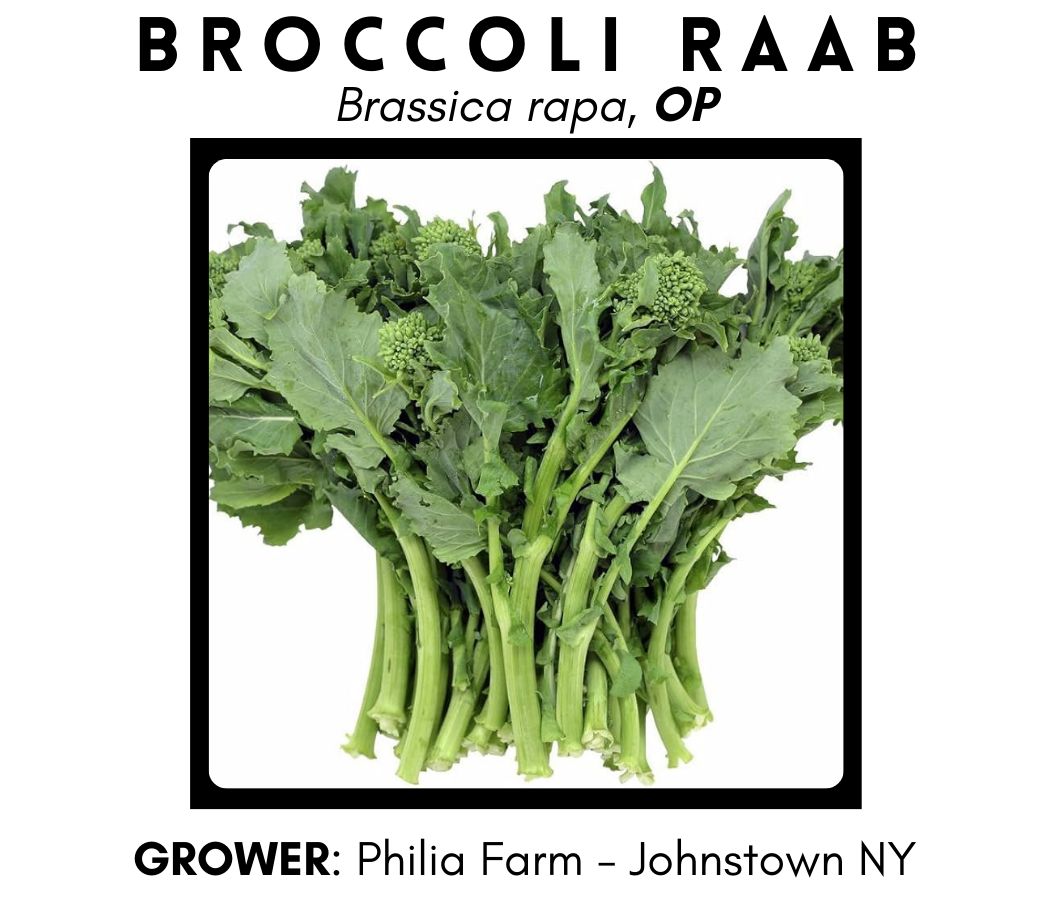
Fast-growing brassica with tender stems, jagged leaves, and small broccoli-like flower buds; prized for its pleasantly bitter, robust flavor in sautés and Italian dishes.
-
DTM: 40-60
Sow depth: ¼ inch
Spacing: 6-8”
Direct sow: sow outdoors in early spring or late summer for fall harvest
Transplant: can be started indoors 3–4 weeks before last frost, though direct sowing is common
Sun: Full sun to partial shade.
Soil: Rich, well-drained soil with consistent moisture; benefits from added organic matter
-
Harvest when flower buds are tight and before opening. Cut the central stem 1–2 inches below the buds; side shoots may continue to develop for additional harvests. Flavor is best in cool weather.
Seed Saving: Easy; allow plants to bolt and flower. Harvest seed pods when they turn brown and dry. Dry further if needed, then thresh and store seeds in a cool, dry place.
-
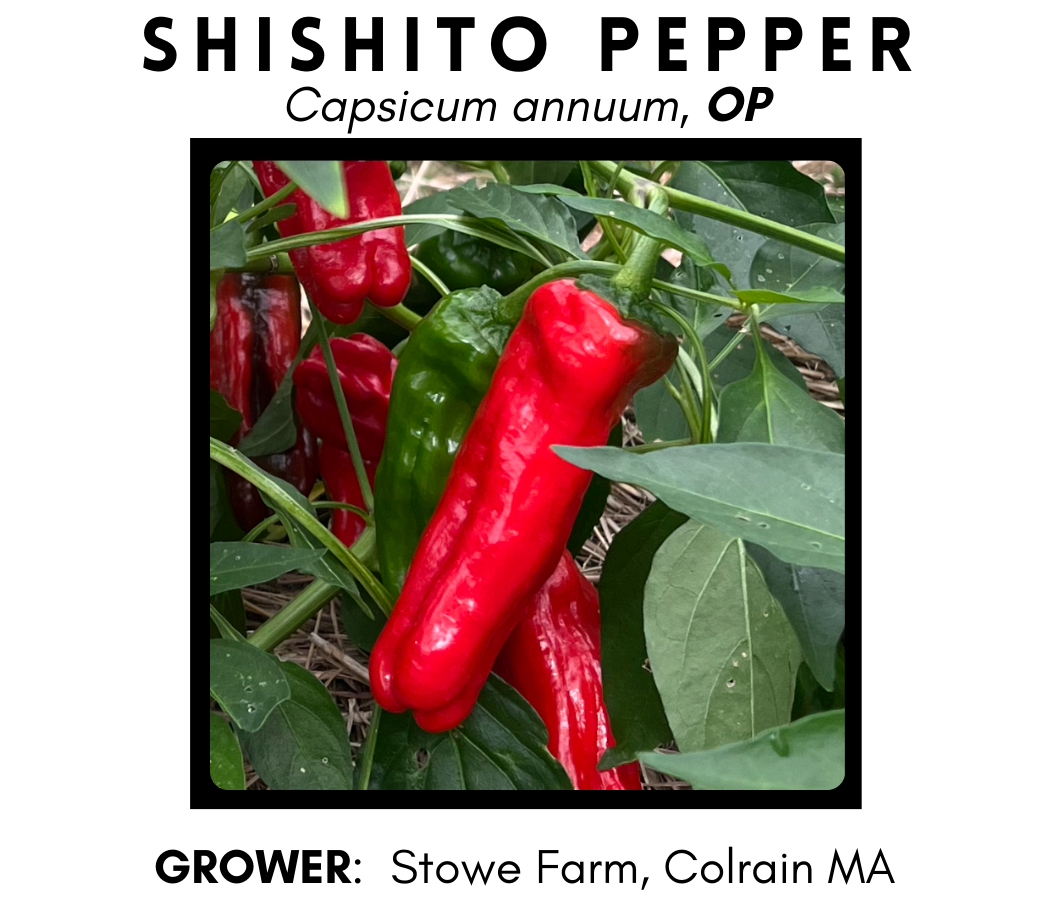
Mild, thin-walled Japanese frying pepper with wrinkled green fruits; most are sweet with occasional mild heat, excellent blistered, grilled, or sautéed.
-
DTM: 65–75 days from transplant to first harvest
Sow depth: ¼ “
Spacing: 18-24”
Direct sow: Not recommended; peppers require warm soil to germinate reliably
Transplant: start indoors 8–10 weeks before last frost and transplant out after nights are consistently warm
Sun: Full sun.
Soil: Well-drained, fertile soil with consistent moisture; prefers slightly acidic to neutral pH
-
Harvest peppers when 3–4 inches long and green for classic shishito flavor. Regular picking encourages continued production.
Seed Saving: allow fruits to fully ripen to red on the plant.
-
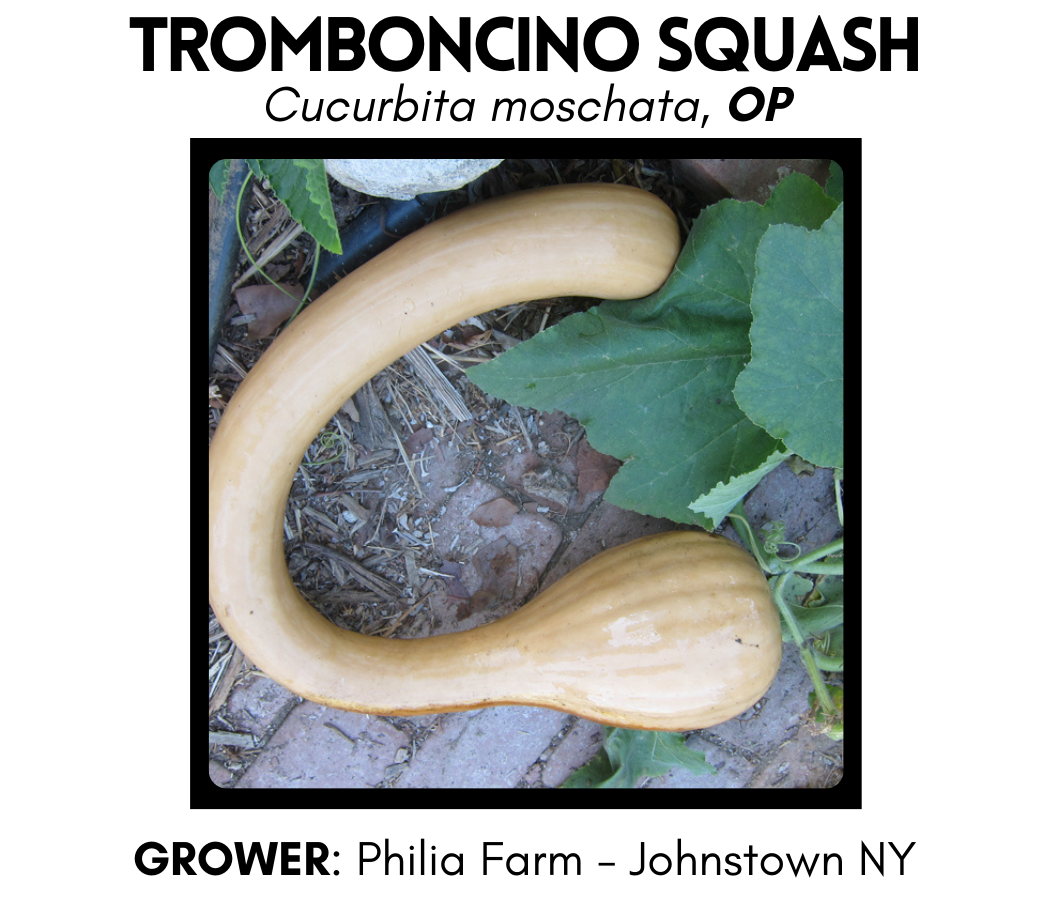
Vigorous, vining heirloom squash with long, curved fruits and mild, nutty flavor; harvested young as a summer squash or mature as a winter squash with good keeping quality.
-
DTM: 95–110 days (mature winter squash)
Sow depth: 1 “
Spacing: 24 - 36” (or 1 plant per mound)
Direct sow: sow outdoors after danger of frost when soil is warm
Transplant: start indoors 3–4 weeks before last frost, handle carefully to avoid root disturbance
Sun: Full sun
Soil: Rich, well-drained soil with plenty of organic matter; consistent moisture supports steady growth
-
allow fruits to fully mature and harden on the vine; cure in a warm, dry place before storage.
Seed Saving: Allow fruits to fully mature on the vine. Scoop seeds, wash to remove pulp, and dry thoroughly before storage.
-
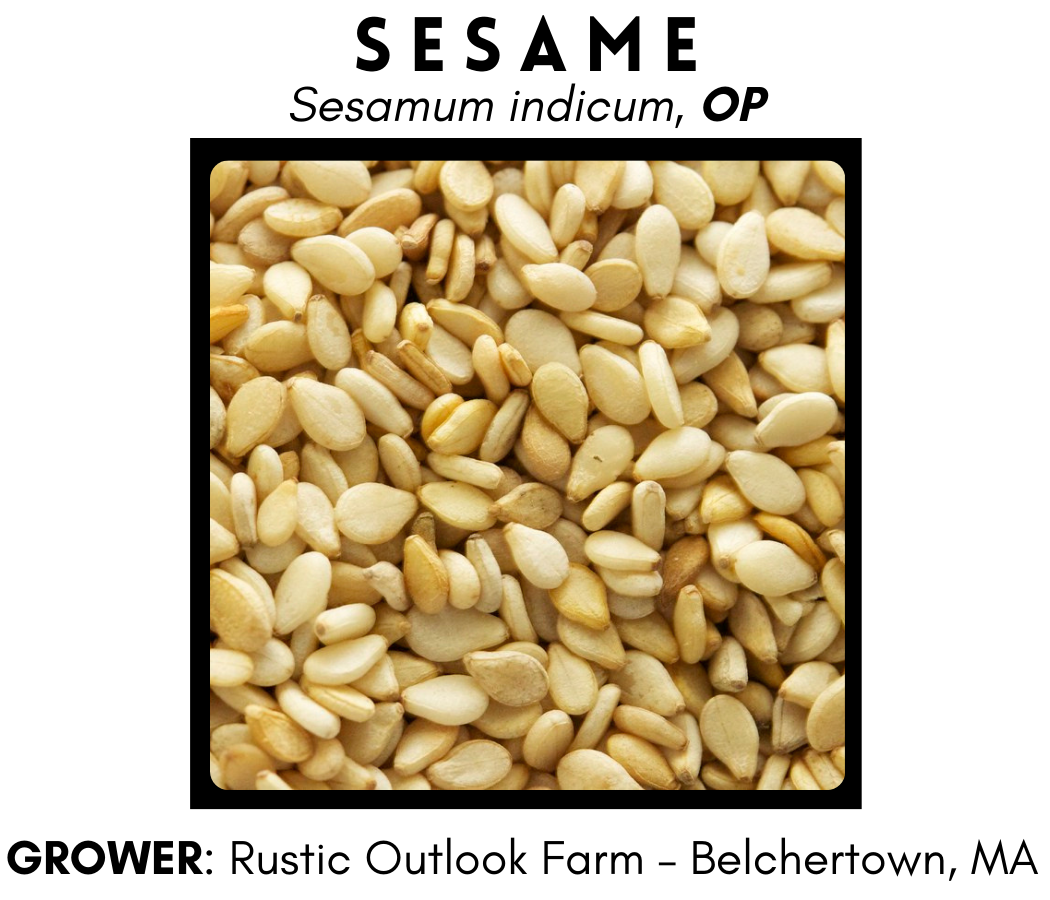
Warm-season annual grown for its oil-rich seeds; upright plants bear tubular flowers followed by seed-filled pods that split open when mature.
-
DTM: 90–120 days
Sow depth: 1/4-1/2”
Spacing: 6-12”
Direct sow: Sow outdoors after danger of frost when soil is fully warm
Transplant: Not recommended.
Sun: Full sun
Soil: Well-drained, moderately fertile soil; tolerates poor soils and drought once established
-
Harvest when lower leaves yellow and pods begin to turn tan but before they fully shatter. Cut whole plants and hang upside down in a dry, well-ventilated area to finish drying, then thresh.
Seed Saving: Allow pods to mature fully. Select non-shattering or early-harvest pods if possible.
The Hillfolk Seed Collective is made up of a number of regional growers who have committed to ecologically-based growing practices. Our seed is grown by farmers who prioritize soil health, biodiversity, and regional resilience. We believe seeds belong to people and should adapt regionally with the farmers and gardeners who grow them. Our seed is non-GMO, open-pollinated, and grown using ethical, chemical-free practices.
OUR GROWERS
keshtyar seed
-
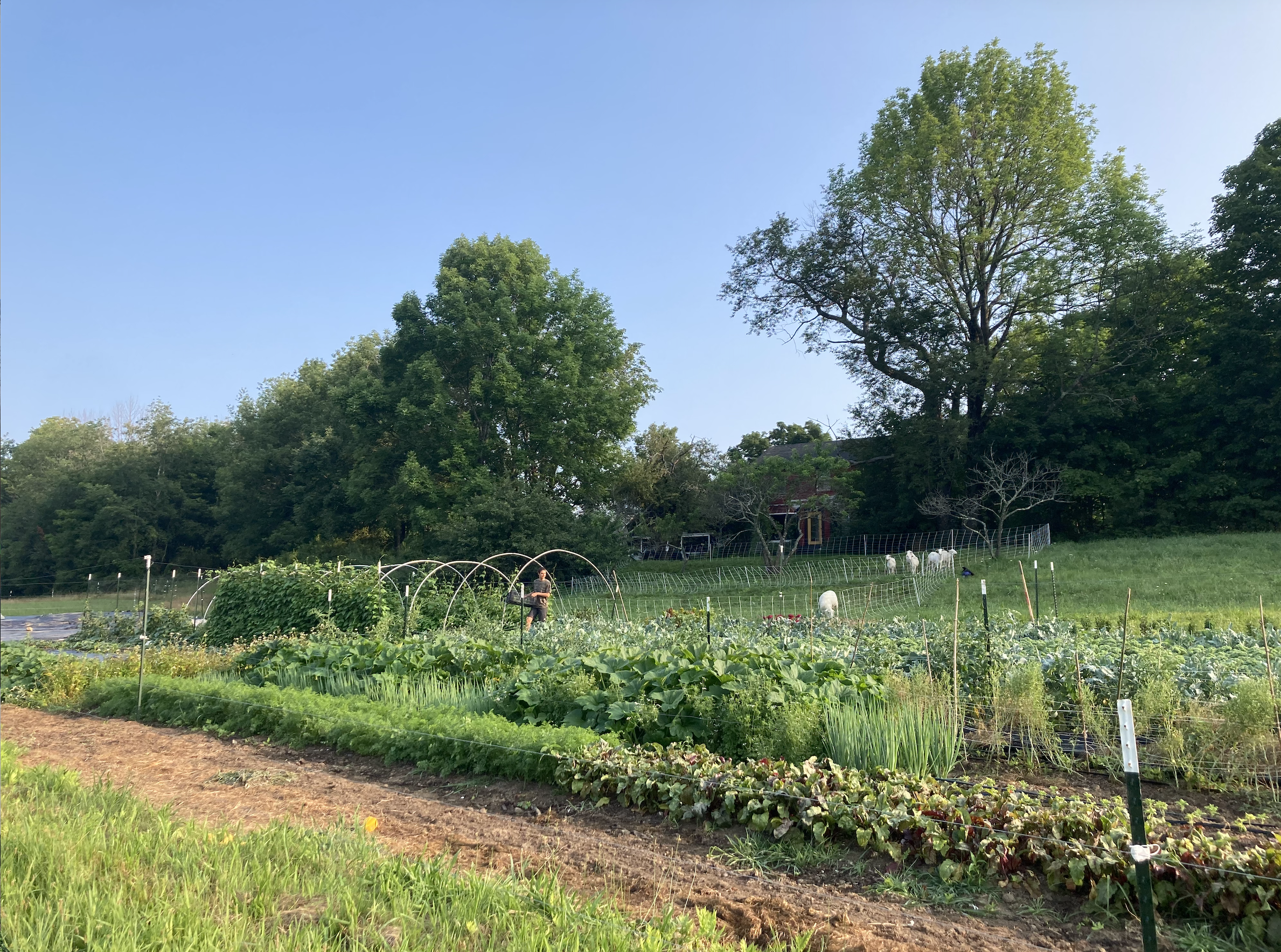
Located in Chesterfield, Massachusetts, Keshtyar Seed is co-managed by Leila Rezvani (they/them) and Brooke Bullock (she/her). We produce open-pollinated seeds and organically grown vegetables using low-till practices. Our goal is to help enhance regional agricultural resilience by providing high-quality, locally adapted seed to growers throughout the Northeast.
Where to find us? You can purchase our seed at True Love Seeds, Experimental Farm Network, Two Seeds In a Pod and Fedco Seeds!
Keshtyar is dedicated to the preservation of agricultural heritage crops. Keshtyar is a part of the Iraqi Seed Collective, which actively conserves the cultural and genetic diversity of crops originating from the SWANA region, safeguarding heirloom varieties for future generations.Leila, as an Iranian-American, is passionate about stewarding crops from their cultural heritage. Brooke, drawing on her family's immigrant farming heritage, is developing her skills in propagating basket willow and growing out flaxseed for fiber.
big sky blooms
-
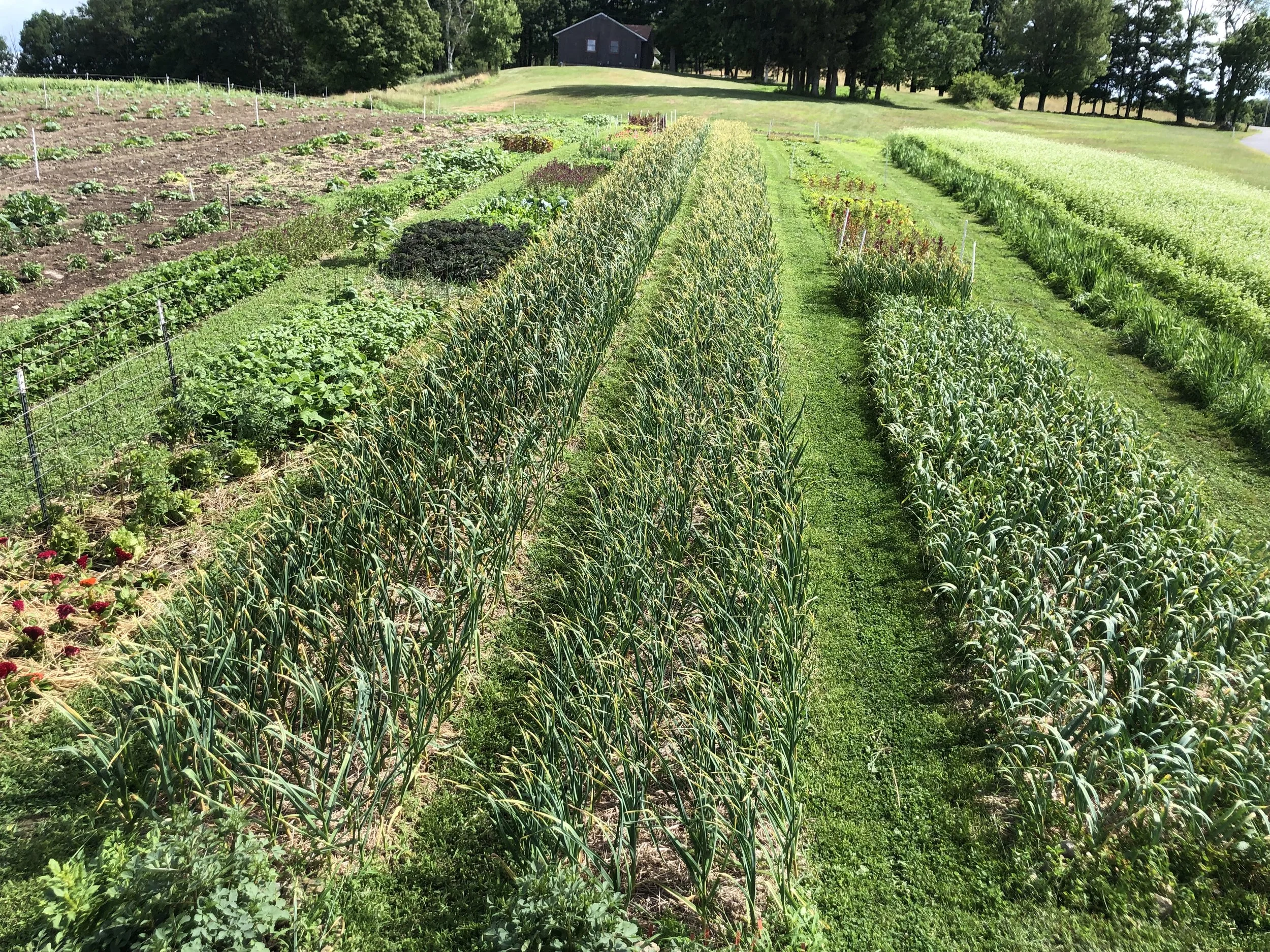
Big Sky Blooms is located at 1,200' in Shelburne Falls with views out to Mnt Monadnock! Renee Ciulla primarily grows garlic, seed crops, flowers and winter squash which are sold wholesale locally. An emphasis is made to grow with reduced tillage, using only local fertilizers/amendments and experimenting with growing in perennial white clover.
rustic outlook farm
-
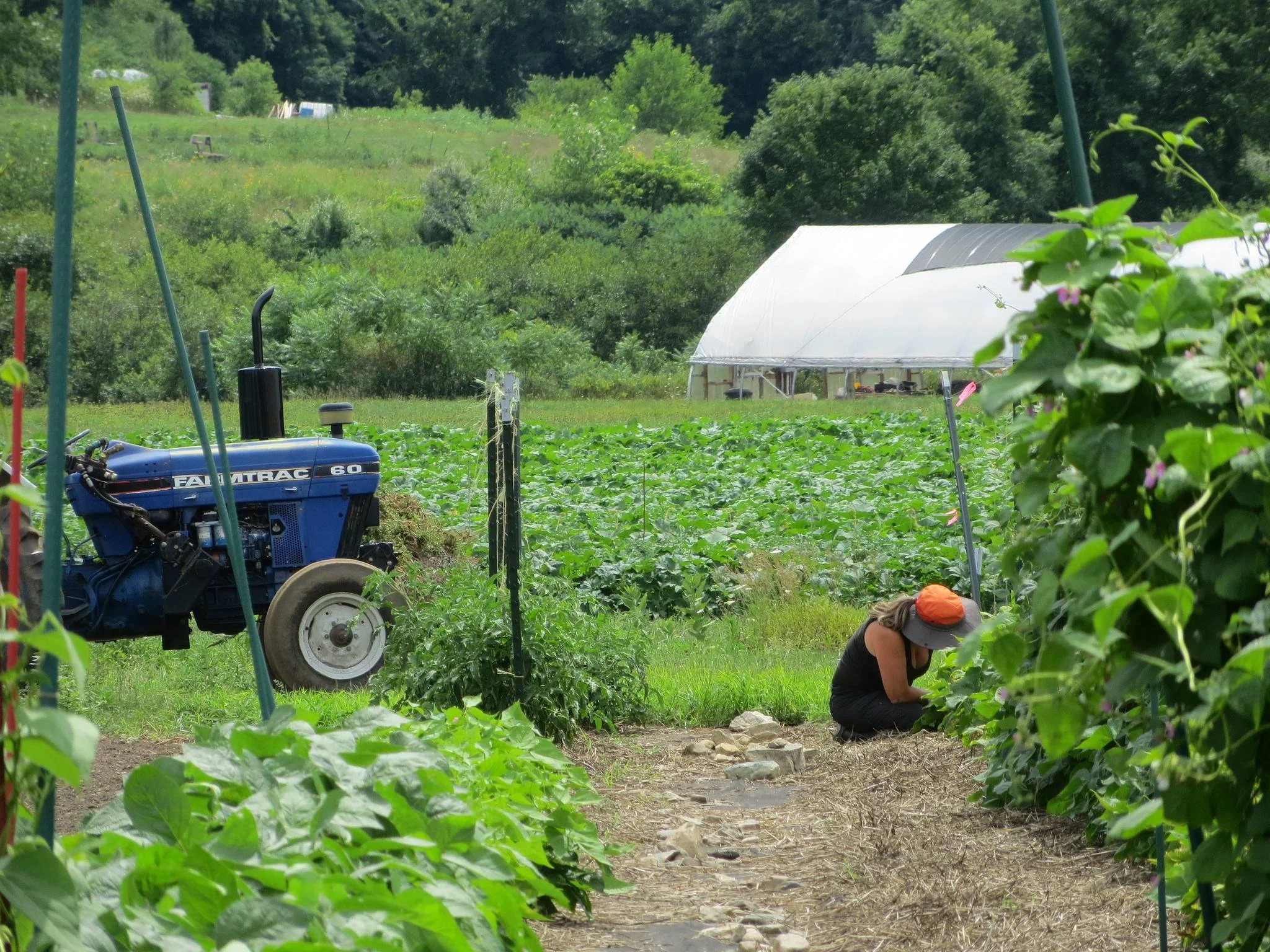
Located in Belchertown, MA, we have been growing dried bean varieties that are suited to our New England climate. Farmer Heather McCann created Rustic Outlook Farm to express her passion for sustainable food systems, which work within the ecosystem while providing access to regionally appropriate fresh produce and seeds.
Rustic Outlook Farm uses organic and regenerative farming techniques, and protects the soil from excessive deep tilling. The best produce comes from feeding the soil rather than the plants, so we take special care to keep the soil healthy, using only OMRI-approved amendments to improve the texture, organic matter and nutrient content of the soil.
philia farm
-
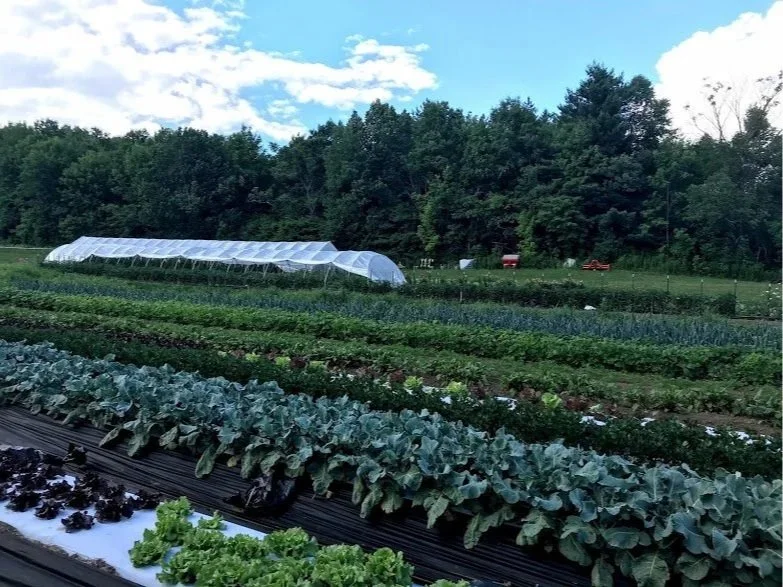
Located in Johnstown, NY. Phila Farm’s mission is to work with the land to create a farm which nurtures our community and us.
stowe farm
-
Located in