

The Hillfolk Seed Collective is a group of small-scale seed growers in Western, MA & Eastern, NY who came together to market locally grown seed under a shared name. Our growers have committed to ecologically-based growing practices, prioritizing soil health, biodiversity, and regional resilience. We believe seeds belong to people and should adapt regionally with the farmers and gardeners who grow them. Our seed is non-GMO, open-pollinated, and grown using ethical, chemical-free practices.
why form a regional seed collective?
Seed systems are increasingly shaped by consolidation, mechanization, and uniformity. A small number of corporations now control much of the global seed supply, prioritizing proprietary varieties, patents, and scale over adaptability, culinary and cultural importance, and farmer knowledge. This has led to the erosion of regionally adapted seed, reduced genetic diversity, and a growing dependence on inputs and supply chains that leave farmers and gardeners vulnerable. Many small farmers do not want to grow seeds that require expensive NPK fertilizers, insecticides, or other chemical or physical interventions— they want to grow what is suited and adapted to their land and climate.
At the same time, farmers who steward seed—often performing highly skilled, time-intensive work—are rarely compensated fairly, contributing to economic precarity and the loss of seed-saving knowledge across generations. As climate instability intensifies, the dominance of uniform varieties further weakens our food systems, making them less responsive to local conditions and ecological stress. Regional seed collectives exist to counter these trends by keeping seed in the hands of people, supporting farmers as seed stewards, and cultivating regionally adapted, open-pollinated varieties that evolve alongside the communities and landscapes where they are grown.
Keep Seeds in the hands of people, not corporations: We need to help carve a path for locally grown, regionally adapted seed in the face of climate change. If you grow open-pollinated, open-source seed and save it, your food can be free the next year. Collectives support your local seed growers, who want you fed, nourished and empowered.
Most vegetable seed sold in the United States is grown far from where it is ultimately planted. Large seed companies concentrate production in regions with dry summers, long growing seasons, and predictable weather—places like the Pacific Northwest, California, and increasingly overseas. These regions offer the consistency and scale that commercial seed production demands: reliable seed set, low disease pressure, mechanization, and lower production costs.
For New England farmers, this geographic disconnect creates real challenges. Our climate is wetter, more humid, and less predictable, with shorter seasons and higher disease pressure. Seed varieties bred and produced in dry western climates often struggle here—bolting too early, succumbing to fungal diseases, or failing to thrive in heavy soils and fluctuating temperatures. Farmers are left adapting their land and labor to seed that was never selected for their conditions.
When seed is not selected under local conditions, it becomes less capable of adapting to regional stresses—particularly as climate change accelerates. For New England, building a regional seed system will bolster the development of varieties that can withstand our climate, support local farmers, and keep seed knowledge rooted in place.
why new england?
what’s different about our seed?
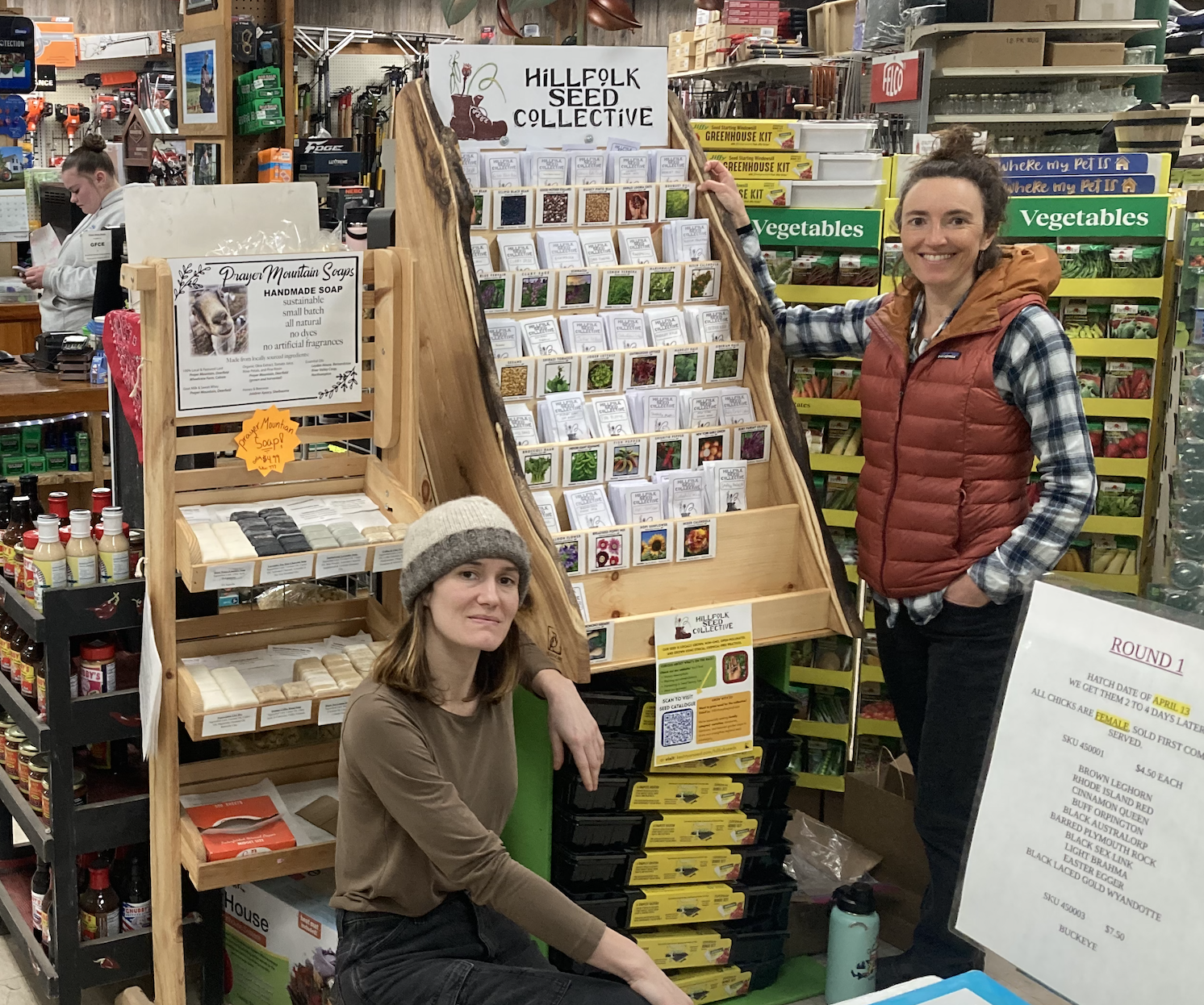
As a small operation, we don’t have access to the same disease testing, germination labs, or storage infrastructure as large commercial seed companies. What we do have: seed grown by people who know the land it comes from.
We hope our customers understand that we might not offer the widest selection of peppers, or lab-certified germination rates, or that a new grower’s cucurbita pepo squash might have unintentionally crossed with a neighbor’s, giving it a quirky look. And yes, our packets may not always be overflowing with seed—but each one represents careful, local growing and the work of real people behind it.
want to grow with us?
Interested in growing seed for the collective ? Email us!
While we do have some basic requirements around plant population and seed lot size, we’re eager to connect with growers who are interested in offering seed through the collective.
Have a seed crop you’ve been stewarding that you’d like to share with us? .
We’re especially excited about varieties that have been grown and adapted in the hilltowns or the surrounding region over many seasons—seeds with deep local roots that may not yet be produced at a larger scale. Hillfolk exists to help bring hyper-local landraces, heirlooms, and beloved kitchen-garden crops to a wider community, always with the blessing and recognition of their original stewards.
We believe these varieties are essential to local seed and food sovereignty, and that the stories they carry help knit us closer together—as growers, cooks, and eaters alike.